
Skip to content

#SpeechMatters 2022

Safeguarding Democracy

April 6–7, 2022

Featured speakers
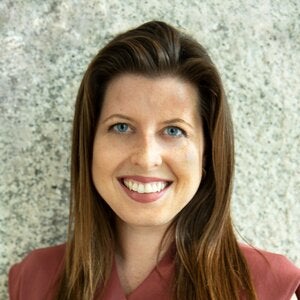
Evette Alexander

Director of Learning and Impact
Knight Foundation
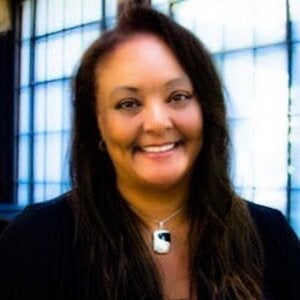
Evette Alexander

Evette Alexander is Director of Learning & Impact at the Knight Foundation. She oversees a portfolio of research studies that inform the dialogue on issue areas close to the foundation’s mission. She also leads evaluation efforts that inform the foundation’s impact strategies and provide learnings to the field.

She holds a Masters in Business Administration from the University of Manchester, and a dual Bachelors of Arts in Economics and Political Science.

Sandra Bass, PhD

Associate Dean of Students and Director, Public Service Center
UC Berkeley
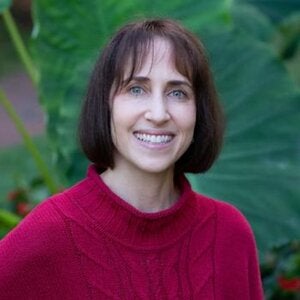
Sandra Bass, PhD

For over 25 years, Sandra Bass has facilitated social change both domestically and internationally through public policy, community engagement, scholarship, and education. She currently serves as Associate Dean of Students and Director of the Public Service Center at UC Berkeley. Upon receiving her doctorate in political science, Sandra was appointed as an assistant professor of Criminology and Political Science at the University of Maryland, College Park, where she integrated service learning into both her undergraduate and graduate courses. In 2002 Sandra joined the David and Lucile Packard Foundation, and in 2010 she was selected to lead the Foundation’s girl’s education, women’s leadership, and reproductive health program in Sub-Saharan Africa, and later was appointed the executive director of Teach With Africa, an organization focused on cross cultural learning for K-12 teachers in the US and South Africa. Sandra has published numerous articles and essays in academic journals and on various platforms, and has co-edited three volumes. She currently serves on the regional board of Multiplying Good (formerly known as the Jefferson Awards Foundation), the UC Berkeley Chancellor’s Community Partnership Fund, the Boards of the East Point Peace Academy and the Movement Strategy Center and Co-Chairs the Vice Chancellor of Student Affairs Civic Engagement Advisory Board at UC Berkeley. She has served as a “Wise Head” reviewer for the MacArthur Foundation 100 and change competition, on the steering committee of the African Grantmakers Affinity Group, and is the former Board Chair of the Ella Baker Center for Human Rights in Oakland, among other appointments. She is also a nonviolence trainer and educator. Sandra holds a BA from San Jose State University, and an MA and PhD from UC Berkeley, all in political science.

Rachel Belin

Managing Partner and Co-Founder
Kentucky Student Voice Team

From Kindergarten to Campus: Common Roots of Democratic Learning
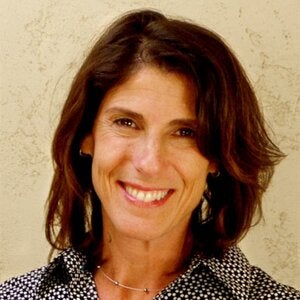
Rachel Belin

Rachel is a co-founder and the managing partner of the Kentucky Student Voice Team, an independent youth-led organization comprising young people who work as education research, policy, and advocacy partners to co-create more just, democratic Kentucky schools and communities. She has decades of experience as, by turns, a high school teacher, youth development director, media literacy educator, legislative aide, and radio news director in multiple states. In the course of this work, she has spearheaded a number of ventures to amplify and elevate the voices of young people around education research and policy in civic spaces, including one that garnered a George Foster Peabody Award. Rachel is a graduate of Harvard College with an MAT in social studies teaching and curriculum from the University of Rochester.

Amy Binder

Professor of Sociology
UC San Diego

The Channels of Student Activism: How the Left and Right Are Winning (and Losing) in Campus Politics Today
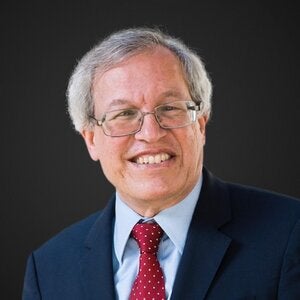
Amy Binder

Amy Binder is Professor of Sociology at the University of California San Diego. She studies higher education from political, organizational, and cultural perspectives. In 2013, she published Becoming Right: How Campuses Shape Young Conservatives, which catalogues not only the issues and ideologies that animate college-age conservatives, but also the civil and provocative styles that dominate different university campuses. Binder and her co-author Jeffrey Kidder will publish The Channels of Student Activism: How the Left and Right Are Winning (and Losing) in Campus Politics Today in May 2022. This book studies students spanning the left, right, and center on four public university campuses in the two years after Donald Trump was elected president. A central focus of the research is to look at how students on the left are largely mobilized by university spaces, while students on the right have more contact—and opportunities—with well-resourced organizations off campus. The two distinct channels shape how progressives and conservatives make sense of speech issues.

Erwin Chemerinsky

Dean
UC Berkeley School of Law

Opening Remarks
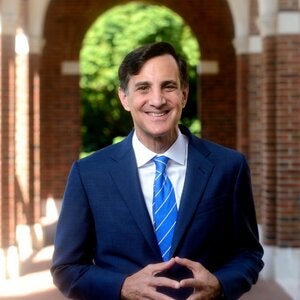
Erwin Chemerinsky

Erwin Chemerinsky became the 13th Dean of Berkeley Law on July 1, 2017, when he joined the faculty as the Jesse H. Choper Distinguished Professor of Law.

Prior to assuming this position, from 2008-2017, he was the founding Dean and Distinguished Professor of Law, and Raymond Pryke Professor of First Amendment Law, at University of California, Irvine School of Law. Before that he was a professor at Duke University from 2004-2008, and from 1983-2004 was a professor at the University of Southern California Law School.

He is the author of eleven books, including leading casebooks and treatises about constitutional law, criminal procedure, and federal jurisdiction. His most recent books are, We the People: A Progressive Reading of the Constitution for the Twenty-First Century (Picador Macmillan) published in November 2018, and two books published by Yale University Press in 2017, Closing the Courthouse Doors: How Your Constitutional Rights Became Unenforceable and Free Speech on Campus (with Howard Gillman). He frequently argues appellate cases, including in the United States Supreme Court.

In 2016, he was named a fellow of the American Academy of Arts and Sciences. In January 2017, National Jurist magazine again named Dean Chemerinsky as the most influential person in legal education in the United States.

Ronald J. Daniels

President
Johns Hopkins University

On Democracy and the Role of Higher Education

Ronald J. Daniels

Ronald J. Daniels has served as the 14th President of Johns Hopkins since 2009. During his tenure, Daniels has focused his leadership on several key areas: strengthening inter-disciplinary collaboration in research and education, enhancing student access, deepening engagement with the city of Baltimore, and supporting economic and social innovation. A law and economics scholar, he has written extensively on the intersections of law, economic development, and public policy, and advocated for the vital role that institutions–and especially institutions of higher education–play in promoting democratic values, including in the recently published What Universities Owe Democracy.

Before coming to Johns Hopkins, he was provost and professor of law at the University of Pennsylvania and dean and James M. Tory Professor of Law of the Faculty of Law at the University of Toronto. He is a fellow of the American Academy of Arts & Sciences and the American Philosophical Society. In 2015, he received a Carnegie Corporation of New York Academic Leadership Award and was named a member of the Order of Canada in 2016. Daniels earned a BA and a JD from the University of Toronto and an LLM from Yale University.

Tiffany Deng

Undergrad Student
UC Santa Barbara

Championing Change: UC Students and Civic Impact
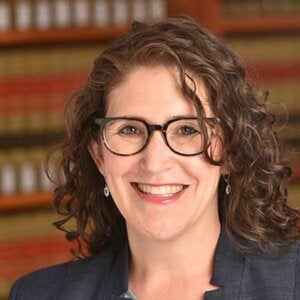
Tiffany Deng

My name is Tiffany Deng and I’m a fourth-year Political Science and Asian American studies double major at University of California Santa Barbara.

I was born and raised in the Bay Area and was largely inspired by the rich history of activism in and around my city to connect with social movements and organizations that focus on collaborative efforts towards a safer and more equitable community.

One group in particular is the UC Disaster Resilience Network, where I am an inaugural Dean’s Fellow alongside my peer Jack Stein. The both of us are currently enrolled in a year-long Civics Scholar course taught at UCSB which has helped expand my knowledge and drive for change. I mainly assist with the creation and distribution of their online newsletter which is sent out system-wide and open to all to subscribe to.

Michelle Deutchman

Executive Director
UC National Center for Free Speech and Civic Engagement

Opening Remarks

Closing Remarks

Opening Remarks

From Kindergarten to Campus: Common Roots of Democratic Learning

Closing Remarks
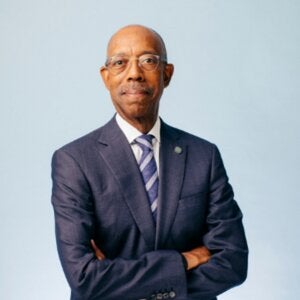
Michelle Deutchman

Michelle N. Deutchman is the inaugural executive director of the UC National Center for Free Speech and Civic Engagement (Center). In this role, she oversees the Center’s operations, programming and research including its multidisciplinary national fellowship program. Deutchman facilitates workshops for staff, students, administrators and law enforcement on First Amendment principles and how to safeguard free speech at universities while simultaneously maintaining a safe and inclusive campus climate. Her work to study and shape the national discourse on expression and engagement touches all 10 UC campuses as well as higher education institutions across the county.

Before joining the Center, Deutchman served for 14 years as western states civil rights counsel and national campus counsel for the Anti-Defamation League (ADL), a non-profit organization that combats bigotry, prejudice and anti-Semitism. As national campus counsel, she focused on emerging trends and challenges pertaining to free expression at colleges and universities. Her work included drafting state and federal legislative testimony and creating training modules for use with ADL’s award-winning anti-bias education program.

During her tenure at ADL, Deutchman also developed subject matter expertise on hate crime laws and how to respond to bias-motivated incidents effectively. She received certification from the California Commission on Peace Officer Standards and Training and educated thousands of local, state and federal law enforcement about the First Amendment and hate crime legislation.

From 2014-2018, Deutchman taught a law seminar at UCLA School of Law that she designed, Sword or Shield: Contemporary Free Exercise Issues.

Deutchman earned her Juris Doctor from the University of Southern California Gould School of Law, where she graduated Order of the Coif. She is a Phi Beta Kappa graduate of the University of California at Berkeley and holds a Bachelor of Arts in Political Science.

Michael V. Drake

President
University of California

On Democracy and the Role of Higher Education
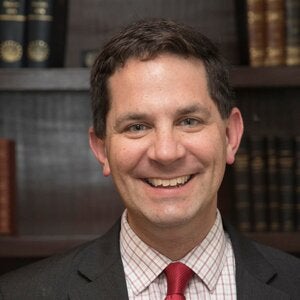
Michael V. Drake

In August 2020, Michael V. Drake, M.D. became the 21st president of UC’s world-renowned system of 10 campuses, five medical centers, three nationally affiliated labs, more than 280,000 students and 230,000 faculty and staff.

Dr. Drake previously served as president of The Ohio State University (OSU) from 2014 through June 2020. Prior to his six years at OSU, his entire academic career has been at UC, including as chancellor of UC Irvine for nine years from 2005 to 2014 and as the systemwide vice president for health affairs from 2000 to 2005.

Drake received his A.B. from Stanford University and his residency, M.D., and fellowship in ophthalmology from UCSF. He subsequently spent more than two decades on the faculty of the UCSF School of Medicine, including as the Steven P. Shearing Professor of Ophthalmology.

Under his leadership, Drake greatly enhanced UC Irvine’s reputation as a premier university. UC Irvine rose to join the top 10 public universities in U.S. News & World Report’s annual list and was ranked by Times Higher Education as the No. 1 university in the U.S. under 50 years old. During his tenure at the campus, the four-year graduation rate increased by more than 18 percent, while undergraduate enrollment and diversity significantly increased. In addition, Drake oversaw the establishment of new schools of law and education as well as programs in public health, nursing and pharmacy.

Drake has published numerous articles and co-authored six books. He served as a reviewer for several medical journals, including the Journal of the American Medical Association, Investigative Ophthalmology and Visual Science and the American Journal of Ophthalmology. Drake is a member of several national scientific and scholarly societies, and has received various awards for teaching, public service, mentoring and research. He is a member of the National Academy of Medicine and the American Academy of Arts and Sciences. He received the UCSF School of Medicine’s Clinical Teaching Award, the Hogan Award for Laboratory Research, the Chancellor’s Award for Public Service, the Martin Luther King Jr. Award for University Service, the UC Irvine Medal, and the University of California Presidential Medal in recognition of his exemplary service to the University.

Drake’s extensive public service experience includes various roles for the American Medical Association, the National Eye Institute, the Association of American Medical Colleges, and multiple commissions on health in the state of California. He is a former chair of the board of directors of the Association of American Universities and currently serves as a member of the board of directors for the Association of Public and Land-grant Universities. He is also the chair of the board of governors of the National Collegiate Athletic Association, a member of the American Talent Initiative Steering Committee, and a member of the board of directors of the Rock and Roll Hall of Fame.

Ron Fein

Legal Director
Free Speech for People

A Response to January 6th: The Fourteenth Amendment and Banning Insurrectionists from Office
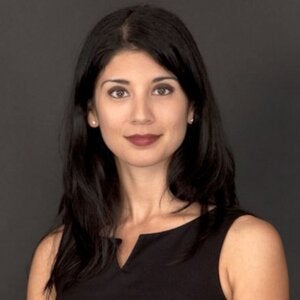
Ron Fein

Ron Fein is the Legal Director for Free Speech For People. Mr. Fein previously served as Assistant Regional Counsel in the United States Environmental Protection Agency’s New England office, where he received the EPA’s National Gold Medal for Exceptional Service, the National Notable Achievement Award, and several other awards. Mr. Fein supervised the office’s Clean Air Act practice and won several major cases, including a first-in-nation air quality permit for an offshore wind farm and a nationally recognized settlement requiring a power plant to virtually eliminate its use of a local river. Mr. Fein previously clerked for the Honorable Kermit Lipez of the United States Court of Appeals for the First Circuit and the Honorable Douglas Woodlock of the United States District Court for the District of Massachusetts. He has also worked as an independent consultant to non-profits, as deputy campaign manager of a congressional campaign, and in software development, for which he was awarded nine patents. Mr. Fein graduated Order of the Coif from Stanford Law School and summa cum laude from Harvard College.

Mary Anne Franks

Professor of Law and Dean's Distinguished Scholar
University of Miami Law School

Social Media, Freedom of Speech, and the Future of our Democracy
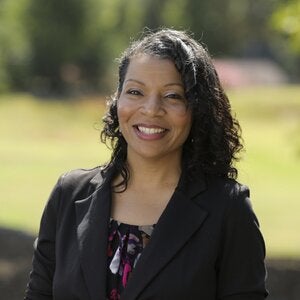
Mary Anne Franks

Dr. Mary Anne Franks, J.D., D.Phil, is a Professor of Law and the Michael R. Klein Distinguished Scholar Chair at the University of Miami. Her areas of expertise include cyberlaw, First Amendment law, Second Amendment law, family law, and criminal law and procedure. She is the author of the award-winning book, The Cult of the Constitution: Our Deadly Devotion to Guns and Free Speech (2019). Dr. Franks holds a J.D. from Harvard Law School as well as a doctorate and a master’s degree from Oxford University, where she studied as a Rhodes Scholar. She previously taught at the University of Chicago Law School as a Bigelow Fellow and Lecturer in Law, and prior to that at Harvard University as a lecturer in social studies and philosophy.

Leslie Garvin

Executive Director
North Carolina Campus Compact

A Response to January 6th: The Fourteenth Amendment and Banning Insurrectionists from Office
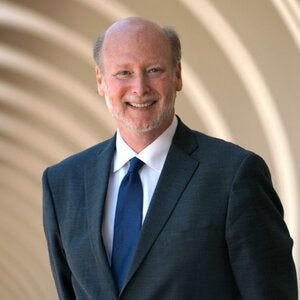
Leslie Garvin

Leslie Garvin is the Executive Director of North Carolina Campus Compact. In this role she facilitates faculty and staff professional development initiatives, builds strategic partnerships to develop and expand higher education civic engagement, and leads the initiatives to address food insecurity and strengthen democracy. A skilled moderator and facilitator, she has trained hundreds of faculty, staff, students, and community partners across the state and country in the National Issues Forum deliberative dialogue method. She is also a Collaborative Discussion Coach, Braver Angels moderator, and facilitator of Theater of the Oppressed workshops.

Garvin has co-authored chapters in Critical Intersections In Contemporary Curriculum & Pedagogy (Info Age Publishing, 2018) and Practical Wisdom for Conducting Research on Service Learning: Pursuing Quality and Purpose (Stylus Publishing, 2019). She served as an author and editor for the Primer on Benefits and Value of Civic and Community Engagement in Higher Education. (2021).

Garvin holds a Master of Social Work with a concentration in social and economic development and a specialization in management, as well as a Bachelor of Arts in political science and African-American Studies, both from Washington University in St. Louis. She serves on the Board of Directors of the National Issues Forum and co-chairs the State Summits & Networks Subcommittee of the Students Learn Students Vote Coalition. She is a proud AmeriCorps alum.

Howard Gillman

Chancellor
UC Irvine

Opening Remarks
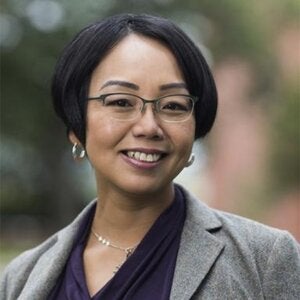
Howard Gillman

Howard Gillman became the sixth chancellor of the University of California, Irvine in September 2014. He is an award-winning scholar and teacher with an expertise in the American Constitution and the Supreme Court, and holds faculty appointments in the School of Law, the Department of Political Science, the Department of History, and the Department of Criminology, Law and Society.

Under Chancellor Gillman’s leadership, UCI has accelerated its ascendency among globally preeminent research universities. It has been ranked in the top 10 of all public universities in the nation by U.S. News & World Report; furthered its national leadership in sustainability; solidified its status as a “first choice” school for undergraduates by receiving more than 133,000 freshman and transfer applications for fall 2021; received special recognition for advancing student success and promoting social mobility; fostered regional economic development through UCI Beall Applied Innovation; and expanded its capacity to improve lives in our region and around the world.

A native of Southern California, Chancellor Gillman grew up in North Hollywood and was a first-generation college student. He earned bachelor’s, master’s, and doctoral degrees in political science at UCLA.

Kei Kawashima-Ginsberg

Newhouse Director
Center for Information and Research on Civic Learning and Engagement (CIRCLE)

From Kindergarten to Campus: Common Roots of Democratic Learning
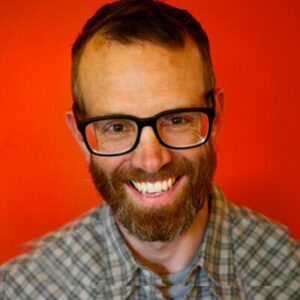
Kei Kawashima-Ginsberg

Kei Kawashima-Ginsberg is the Newhouse Director of Center for Information and Research on Civic Learning and Engagement (CIRCLE) at Jonathan M. Tisch College of Civic Life at Tufts University. CIRCLE is a nonpartisan national research institute that focuses on youth civic and political learning and engagement. CIRCLE uses its expansive portfolio of research initiatives, tools for practitioner organizations, educators and other civic stakeholders, and reports to advance equity-centered policy and practice in the civic sector. With a background in positive youth development and community psychology she sees research can be a powerful tool to address inequity in opportunities for civic learning and participation at all levels of society.

Jeffrey L. Kidder

Professor of Sociology
Northern Illinois University

The Channels of Student Activism: How the Left and Right Are Winning (and Losing) in Campus Politics Today
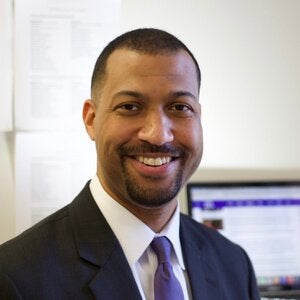
Jeffrey L. Kidder

Jeffrey L. Kidder is a Professor of Sociology at Northern Illinois University, where his work addresses a variety of topics within the area of cultural sociology. His most recent research focuses on collegiate activism, with an emphasis on the intersection of political identities and worldviews in students’ lives.

Chris Lewis

President and CEO
Public Knowledge

Social Media, Freedom of Speech, and the Future of our Democracy
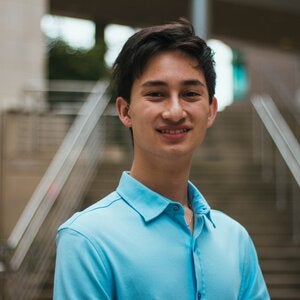
Chris Lewis

Christopher Lewis is President and CEO at Public Knowledge. Prior to being elevated to President and CEO, Chris served as PK’s Vice President from 2012 to 2019 where he led the organization’s day-to-day advocacy and political strategy on Capitol Hill and at government agencies. During that time he also served as a local elected official, serving two terms on the Alexandria City Public School Board.

Chris serves on the Board of Directors for the Institute for Local Self Reliance and represents Public Knowledge on the Board of the Broadband Internet Technical Advisory Group (BITAG).

Before joining Public Knowledge, Chris worked in the Federal Communications Commission Office of Legislative Affairs, including as its Deputy Director. He is a former U.S. Senate staffer for the late Sen. Edward M. Kennedy and has over 18 years of political organizing and advocacy experience, including serving as Virginia State Director at GenerationEngage, and working as the North Carolina Field Director for Barack Obama’s 2008 Presidential Campaign and other roles throughout the campaign. Chris graduated from Harvard University with a Bachelor’s degree in Government and lives in Alexandria, VA where he continues to volunteer and advocate on local civic issues.

Aidan Lin

Undergrad Student
UC San Diego

Championing Change: UC Students and Civic Impact
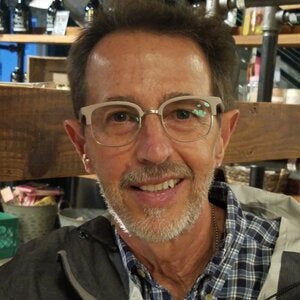
Aidan Lin

Aidan Lin is a second-year student at UC San Diego studying political science and pursuing a minor in climate change studies. He serves as the Associate Vice President of Local Affairs at the Associated Students of UC San Diego and is the Executive Director of Our Time to Act United, a 501(c)(3) youth empowerment nonprofit. Aidan is passionate about civic engagement, particularly among youth, and spearheaded an effort to transform San Diego’s political districts to better represent students and communities of color.

Lewis Pitts

Retired Civil Rights Attorney

A Response to January 6th: The Fourteenth Amendment and Banning Insurrectionists from Office
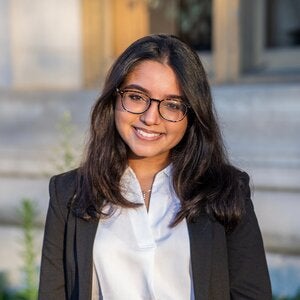
Lewis Pitts

Lewis Pitts graduated from the University of South Carolina School of Law and for 40 years used activism and the law throughout the South to seek change alongside historically marginalized groups. Lewis has advocated for racial justice, children’s rights to be heard, and environmental justice with emphasis on free speech activism as essential to self-government. He has had a hand in landmark proceedings including being co-lead attorney in the Greensboro Massacre civil rights case which held Greensboro police, Klan, and Nazis liable for wrongful death. He later represented activist Brett Bursey arguing his right to protest cannot be restricted to a small, ineffective “free speech zone” since America is a Free Speech Zone. In retirement, he continues to advocate for public access to police body camera recordings and police accountability, as well as organizing around the Madison Cawthorn Voter Challenge. Lewis’ core message is that creative litigation coordinated simultaneously with other free speech tactics, such as leafleting, protesting, public education and organizing, is the best hope of building and protecting essential People’s social movements for fundamental change.

Mansi Seth

Undergrad Student
UC Berkeley

Championing Change: UC Students and Civic Impact
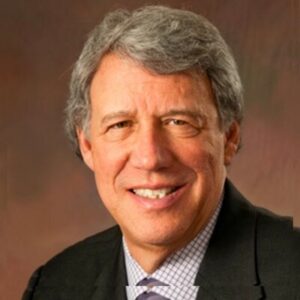
Mansi Seth

Mansi Seth is a sophomore at UC Berkeley committed to helping students become active and informed participants of democracy. She is passionate about advocating for making voting more inclusive and accessible to Berkeley students, especially within historically marginalized and underrepresented communities. As director of the Associated Students of the University of California (ASUC) Vote Coalition, Mansi collaborates with peers to plan and execute voter registration drives and educational events. She is currently working with students from all nine UC campuses to advocate for an Election Day non-instructional day in an effort to address inequalities in access to the ballot box.

Geoffrey R. Stone

Professor
University of Chicago Law School

Social Media, Freedom of Speech, and the Future of our Democracy
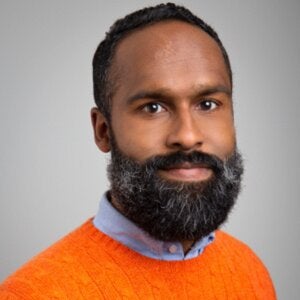
Geoffrey R. Stone

Geoffrey R. Stone is the Edward H. Levi Distinguished Service Professor at the University of Chicago. Mr. Stone joined the faculty in 1973, after serving as a law clerk to Supreme Court Justice William J. Brennan, Jr. He later served as Dean of the Law School (1987-1994) and Provost of the University of Chicago (1994-2002).

Stone is the author of many books on constitutional law, including Sex and the Constitution: Sex, Religion and Law from America’s Origins to the Twenty-First Century (2017); Speaking Out: Reflections of Law, Liberty and Justice (2010 & 2016); Top Secret: When Our Government Keeps Us in the Dark (2007), War and Liberty: An American Dilemma (2007), Perilous Times: Free Speech in Wartime (2004), and Eternally Vigilant: Free Speech in the Modern Era (Chicago 2002). He is also an editor of two leading casebooks, Constitutional Law (7th ed. 2013) and The First Amendment (5th ed. 2016). Stone is an editor of The Supreme Court Review and chief editor of a twenty-volume series, Inalienable Rights, which is being published by the Oxford University Press.

Stone was appointed by President Obama to serve on the President’s Review Group on Intelligence and Communications Technologies, which evaluated the government’s foreign intelligence surveillance programs in the wake of Edward Snowden’s leaks. He is a Fellow of the American Academy of Arts and Sciences, a member of the America Law Institute, the National Advisory Council of the American Civil Liberties Union, a member of the American Philosophical Society, and a member of the Board of Advisors of the Council for Democracy and Technology. He has served as Chair of the Board of the American Constitution Society and Chair of the Board of the Chicago Children’s Choir.

Stone has also written amicus briefs for constitutional scholars in a number of Supreme Court cases, including Obergefell v. Hodges, Whole Woman’s Health v. Hellerstadt, Lawrence v. Texas, United States v. Windsor, United States v. Stevens, and Rasul v. Bush. He was also one of the lawyers who represented President Bill Clinton in the Supreme Court in Clinton v. Jones.

Emerson Sykes

Staff Attorney
ACLU

The Channels of Student Activism: How the Left and Right Are Winning (and Losing) in Campus Politics Today
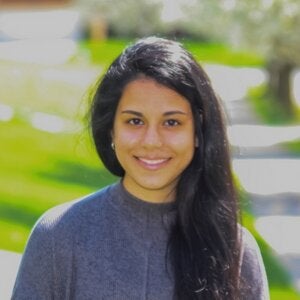
Emerson Sykes

Emerson is a staff attorney with the ACLU Speech, Privacy, and Technology Project where he focuses on First Amendment free speech protections.

Prior to joining the ACLU in 2018, he was a legal advisor for Africa at the International Center for Not-for-Profit Law (ICNL). He provided technical legal assistance to African civil society leaders, government officials, law students, and other stakeholders to improve the legal framework protecting the freedom of association, assembly, and expression. Emerson previously served as assistant general counsel to the New York City Council, where he worked to increase transparency for council members’ discretionary spending, and contributed to the council’s friend-of-the-court brief against the NYPD’s “Stop and Frisk” program. In 2011, he was a senior policy fellow in the office of a Member of Parliament in Ghana. Earlier in his career, Emerson conducted research and wrote about U.S. foreign policy for The Century Foundation and worked for the National Democratic Institute’s Central and West Africa Team.

Emerson holds a J.D. from NYU Law, where he was a Root-Tilden-Kern scholar for public interest law, and a Master of Public Affairs from the Woodrow Wilson School at Princeton. He earned a B.A. in political science at Stanford.

Pragya Upreti

Research Lead; Race, Ethnicity, and School Climate Study
Kentucky Student Voice Team

From Kindergarten to Campus: Common Roots of Democratic Learning

Pragya Upreti

Pragya serves as the research lead for the Kentucky Student Voice Team’s Race, Ethnicity, and School Climate Study. In this capacity, she supported two dozen other high school researchers to analyze data they collected from over 10,000 students from across the state who completed a survey they designed to help inform public conversation around the teaching of race in school. Pragya has also served as a qualitative researcher on the Team’s 2020 statewide Coping With COVID-19 Study, organized one of Kentucky’s first student-led town halls for school board candidates during the November 2020 elections, and worked on several of KSVT’s legislative initiatives, including the Save Our Seats campaign to protect the student and teacher seats on the state school board and most recently, efforts to oppose House Bills 14 and 18 to censor conversations about systemic racism and other topical issues in school. In addition to opinion pieces published in Kentucky newspapers, Pragya has written for the National Association of State Boards of Education and co-authored a publication with the Aspen Institute. She is a senior at Lafayette High School in Lexington, Kentucky.