
Skip to content

#SpeechMatters 2025

Truth, Trust and Transformation

April 10, 2025

Featured speakers
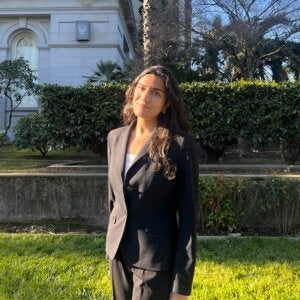
Saanvi Arora

Executive Director
Youth Power Project

(Re)Building Trust in Higher Education

Saanvi Arora

Saanvi Arora is a public policy and computer science undergraduate at UC Berkeley. She serves as External Affairs Vice President for the ASUC and is also the Executive Director of the Youth Power Project, a nonprofit focused on advancing holistic health & wellbeing policy for youth that has introduced/passed over a dozen state and federal policies. Her work focuses on the intersections of public policy, technology, and community health, with particular emphasis on how AI systems, data privacy, and digital surveillance impact healthcare access, criminal justice, and civic participation.

Arora has been recognized for advancing key policies improving youth access to reproductive, sexual, and mental healthcare, including driving the unanimous passage of S.Res.769 through the U.S. Senate, which declared an adolescent mental health emergency. Her current work examines how emerging technologies and surveillance systems affect healthcare delivery, privacy rights, and youth civic engagement, especially in education systems. As External Affairs Vice President, she specifically oversees UC Berkeley’s government relations and civic engagement efforts, including during the 2024 election, and liaises between administrators and student groups in advancing access to free speech and political expression. Overall, she advocates for cultural, educational, and institutional improvements that both protect individual privacy and promote youth participation in civic discussions.

Sarah Brown

Senior Editor
The Chronicle of Higher Education

Taking the Temperature of Campus Speech
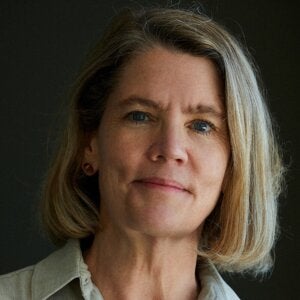
Sarah Brown

Sarah Brown joined The Chronicle of Higher Education in 2015. As of 2022, she is the news editor, leading daily-coverage decisions and overseeing the reporting internship program.
In more than six years as a reporter, Sarah wrote about Title IX and colleges’ handling of sexual assault and harassment, whether higher ed is really committed to racial equity, and how mental-health struggles are derailing students, academically and otherwise. In addition to campus culture, she covered enrollment challenges, financial turmoil, leadership controversies, and the connection between education and health.
Sarah’s bylines have appeared in The New York Times and other newspapers, and she makes regular broadcast-media appearances for The Chronicle, including on C-SPAN, St. Louis Public Radio, Wisconsin Public Radio, WBUR (Boston), and KUOW (Seattle).
Sarah studied journalism and political science at the University of North Carolina at Chapel Hill, but she likes to say that she really graduated from The Daily Tar Heel, where she was a reporter and editor all four years.

Simone Chambers

Professor and Chair of Political Science
UC Irvine

Mis/Disinformation and the Decline of Expertise
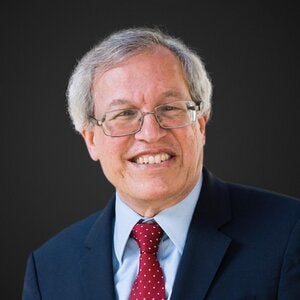
Simone Chambers

Simone Chambers is professor of political science at the University of California Irvine. She has written and published on such topics as deliberative democracy, referendums, constitutional politics, the public sphere, secularism, rhetoric, civility, digital misinformation and the work of Jürgen Habermas and John Rawls. Her most recent book, Contemporary Democratic Theory (Polity 2024), assesses the state of democratic theory under conditions of democratic crisis. She is presently working on a book of collected essays: Deliberation and the Future of Democracy: A realistic but not realist political theory.

Erwin Chemerinsky

Dean
UC Berkeley School of Law

Co-Chairs in Conversation
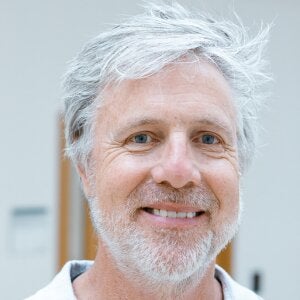
Erwin Chemerinsky

Erwin Chemerinsky became the 13th Dean of Berkeley Law on July 1, 2017, when he joined the faculty as the Jesse H. Choper Distinguished Professor of Law.

Prior to assuming this position, from 2008-2017, he was the founding Dean and Distinguished Professor of Law, and Raymond Pryke Professor of First Amendment Law, at University of California, Irvine School of Law. Before that he was a professor at Duke University from 2004-2008, and from 1983-2004 was a professor at the University of Southern California Law School.

He is the author of eleven books, including leading casebooks and treatises about constitutional law, criminal procedure, and federal jurisdiction. His most recent books are, We the People: A Progressive Reading of the Constitution for the Twenty-First Century (Picador Macmillan) published in November 2018, and two books published by Yale University Press in 2017, Closing the Courthouse Doors: How Your Constitutional Rights Became Unenforceable and Free Speech on Campus (with Howard Gillman). He frequently argues appellate cases, including in the United States Supreme Court.

In 2016, he was named a fellow of the American Academy of Arts and Sciences. In January 2017, National Jurist magazine again named Dean Chemerinsky as the most influential person in legal education in the United States.

Chris Coward

Co-Founder
Center for an Informed Public

Mis/Disinformation and the Decline of Expertise
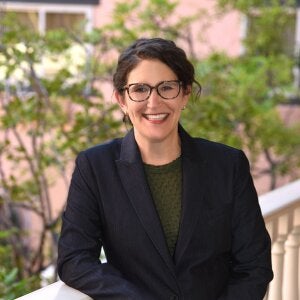
Chris Coward

Coward is a Senior Principal Research Scientist at the University of Washington Information School and co-founder of the Center for an Informed Public. Coward, who previously served as director of the Technology & Social Change Group at the iSchool, studies issues of information access, digital equity, information and digital literacy, misinformation, and civic engagement. His research is primarily applied, and he uses participatory methods when engaging with communities. Much of Chris’s research involves partnering with public libraries to co-create new programs around his areas of expertise.

Michelle Deutchman

Executive Director
UC National Center for Free Speech and Civic Engagement

Opening Remarks

Closing Remarks
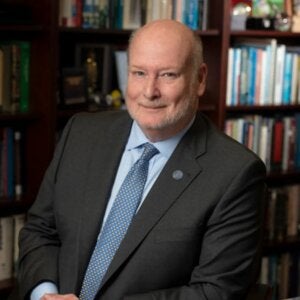
Michelle Deutchman

Michelle N. Deutchman is the inaugural executive director of the UC National Center for Free Speech and Civic Engagement (Center). In this role, she oversees the Center’s operations, programming and research including its multidisciplinary national fellowship program. Deutchman facilitates workshops for staff, students, administrators and law enforcement on First Amendment principles and how to safeguard free speech at universities while simultaneously maintaining a safe and inclusive campus climate. Her work to study and shape the national discourse on expression and engagement touches all 10 UC campuses as well as higher education institutions across the county.

Before joining the Center, Deutchman served for 14 years as western states civil rights counsel and national campus counsel for the Anti-Defamation League (ADL), a non-profit organization that combats bigotry, prejudice and anti-Semitism. As national campus counsel, she focused on emerging trends and challenges pertaining to free expression at colleges and universities. Her work included drafting state and federal legislative testimony and creating training modules for use with ADL’s award-winning anti-bias education program.

During her tenure at ADL, Deutchman also developed subject matter expertise on hate crime laws and how to respond to bias-motivated incidents effectively. She received certification from the California Commission on Peace Officer Standards and Training and educated thousands of local, state and federal law enforcement about the First Amendment and hate crime legislation.

From 2014-2018, Deutchman taught a law seminar at UCLA School of Law that she designed, Sword or Shield: Contemporary Free Exercise Issues.

Deutchman earned her Juris Doctor from the University of Southern California Gould School of Law, where she graduated Order of the Coif. She is a Phi Beta Kappa graduate of the University of California at Berkeley and holds a Bachelor of Arts in Political Science.

Howard Gillman

Chancellor
UC Irvine

Co-Chairs in Conversation
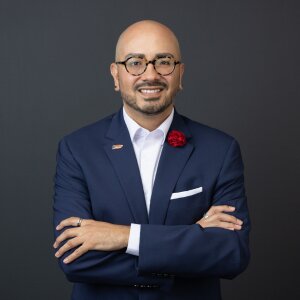
Howard Gillman

Howard Gillman became the sixth chancellor of the University of California, Irvine in September 2014. He is an award-winning scholar and teacher with an expertise in the American Constitution and the Supreme Court, and holds faculty appointments in the School of Law, the Department of Political Science, the Department of History, and the Department of Criminology, Law and Society.

Under Chancellor Gillman’s leadership, UCI has accelerated its ascendency among globally preeminent research universities. It has been ranked in the top 10 of all public universities in the nation by U.S. News & World Report; furthered its national leadership in sustainability; solidified its status as a “first choice” school for undergraduates by receiving more than 133,000 freshman and transfer applications for fall 2021; received special recognition for advancing student success and promoting social mobility; fostered regional economic development through UCI Beall Applied Innovation; and expanded its capacity to improve lives in our region and around the world.

A native of Southern California, Chancellor Gillman grew up in North Hollywood and was a first-generation college student. He earned bachelor’s, master’s, and doctoral degrees in political science at UCLA.

Miguel Ángel Hernández

Associate Vice President for Student Life and Dean of Students
San Francisco State University

Taking the Temperature of Campus Speech
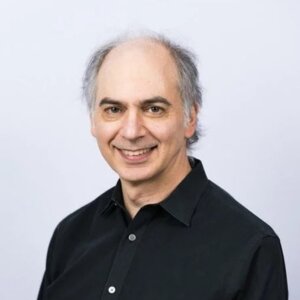
Miguel Ángel Hernández

Dr. Miguel Ángel Hernández is a native of Puerto Rico and identifies as Afro-Caribbean. As a first-generation college graduate, he earned a bachelor of science degree from Columbus State University and a master of arts degree from Appalachian State University. He completed his doctoral degree in Higher Education at Florida State University. His research agenda focused on DACA students who engage in social activism. Professionally, Dr. Hernández is passionate about working with college students, staff, and faculty in navigating the process of creating diverse and inclusive communities; developing culturally responsive practices reflected in policies, procedures, and decision making; and serving as a resource throughout the community.

Currently, Dr. Hernández serves as the Associate Vice President and Dean of Students at San Francisco State University. In this role, he leads the Division of Student Life and Dean of Students. The areas within his division include: Basic Needs, Campus Recreation, Fraternity & Sorority Life, Orientation, Residential Life, Safe Place, Student Activities, Care & Case Management, Student Conduct and serves as liaison to the SF Associated Student Government. Additionally, Dr. Hernández serves as a member of the President’s extended cabinet, the Vice President for Student Affairs and Enrollment Management leadership team, and co-chairs both the University Public Safety Advisory Committee and the SFSU Time, Place, and Manner Policy Group.

Anthony Laden

Professor of Philosophy
University of Illinois, Chicago

(Re)Building Trust in Higher Education
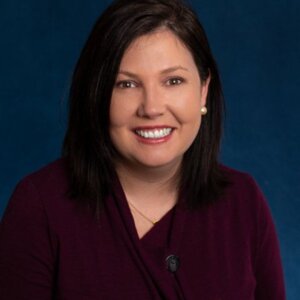
Anthony Laden

Anthony Simon Laden is Professor of Philosophy at the University of Illinois at Chicago, and Associate Director of the Center for Ethics and Education. He works in the philosophy of education, political philosophy and social epistemology, and has written on trust, reasoning together, civility and democracy, among other topics. He is the author of Reasoning: A Social Picture (Oxford 2012), and most recently Networks of Trust: The Social Costs of College and What We Can Do About Them (Chicago, 2024).

Bobbie Laur

President
Campus Compact

(Re)Building Trust in Higher Education
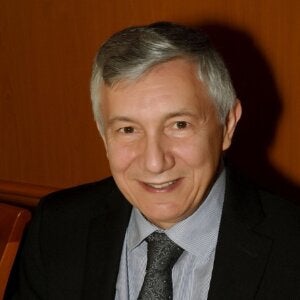
Bobbie Laur

Bobbie Laur was named President of Campus Compact in January 2022. Campus Compact is the nation’s largest national organization dedicated to higher education civic and community engagement. Our mission is to advance the public purposes of colleges and universities by deepening their ability to improve community life and educate students for civic and social responsibility. The Compact advances this mission through community-based learning, advocacy, transformational initiatives and experiences, research and publications, strategic partnerships and professional development. All of the work centers on higher education’s responsibility to create a just, equitable, and sustainable future.

Bobbie’s passion, research, and work have been grounded in the place-based mission of higher education and the necessity of developing mutually beneficial partnerships to address the needs for the communities and neighborhoods in which universities and colleges are located. With deep experience in the institutionalization of community engagement and creating institution-wide strategies to advance the work, Bobbie has counseled and supported campuses throughout the country in creating sustainable structures and pathways to strengthen civic and community engagement. Bobbie previously served as the Executive Director of the Coalition of Urban and Metropolitan Universities and held several administrative responsibilities at her alma mater, Towson University, during her 15+ year tenure including serving as the Associate Vice President for Outreach. Bobbie serves on a number of national and Baltimore-based boards that advocate for creating vibrant and healthy communities. She is currently completing her Doctorate in Public Administration from the University of Baltimore and holds a B.S. in Finance from Towson University.

Steven Mintz

Professor of History
University of Texas at Austin

(Re)Building Trust in Higher Education
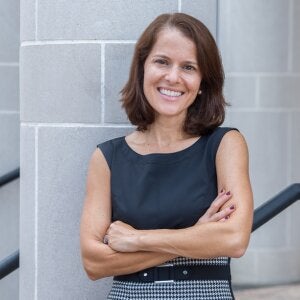
Steven Mintz

A pioneer in the application of new technologies to teaching and research and an award-winning teacher and author, Professor Mintz is a leading authority on families, children, youth, and the life course. He has also published extensively on slavery, social reform, ethnicity, and film.

For five years, he served as the founding director of The University of Texas System’s Institute for Transformational Learning, which was responsible for designing and testing new educational models and technologies that can make a quality education more accessible, affordable, and successful. To achieve those goals, the institute developed breakthrough pathways to meaningful credentials, created technologies to support immersive and personalized education, and harnessed the power of fine-grained learning analytics.

He also served as senior advisor to the president of Hunter College for student success and director of Columbia University’s Graduate School of Arts & Sciences Teaching Center.

As a historian, he is the author of 15 books, including The Prime of Life: A History of Modern Adulthood, a New York Times Book Review Editor’s Choice, and Huck’s Raft: A History of American Childhood, which received major prizes from the Association of American Publishers, the Organization of American Historians, and the Texas Institute of Letters. His latest book, The Learning-Centered University: Making College a More Developmental, Transformational, and Equitable Experience, will be published by Johns Hopkins University Press in January 2024.

A former fellow at the Center for Advanced Study in the Behavioral Sciences at Stanford and a visiting scholar at Harvard’s Center for European Studies, he came to UT from Columbia University. He has also taught at Oberlin College, the University of Houston, Harvard University’s Extension School, Pepperdine University, and Universitat-GH-Siegen.

In addition, he has served as president of the Society for the History of Children and Youth and of H-Net: Humanities and Social Sciences Online, and chaired the Council on Contemporary Families, an organization of leading academics and clinicians committed to improving the public conversation on families and their needs. 


He is also the creator of the Digital History website, which is used by 150,000 teachers and students a week and which has been named one of the Top 5 sites in U.S. history and been placed on the National Endowment for the Humanities EdSitement list of exemplary online resources in the humanities.

In addition to playing an active role in the professional development of K-12 teachers and in programs to bring students from historically underrepresented groups into the professoriate, he is a member of the Society of American Historians, whose members are chosen on the basis of literary distinction. He has also chaired the Bancroft Prize and Frederick Douglass Book Prize juries, twice served as a juror for the Lincoln Prize, and received over $15 million in external funding, including two National Endowment for the Humanities Challenge Grants.

Mary-Rose Papandrea

Professor of Constitutional Law
University of North Carolina at Chapel Hill

Taking the Temperature of Campus Speech
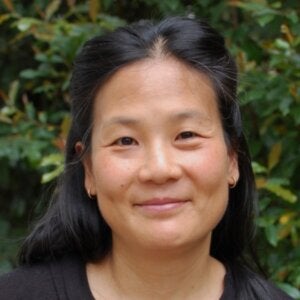
Mary-Rose Papandrea

Mary-Rose Papandrea joined the Carolina Law faculty in 2015 and serves as the Samuel Ashe Distinguished Professor of Constitutional Law. Her teaching and research interests include constitutional law, media law, civil procedure, national security, and torts. Papandrea is the author of numerous book chapters and articles on media law and First Amendment topics, including universities and speech, government secrecy and the press, public employee speech rights, and government speech. Her work has appeared in the Michigan Law Review, Northwestern Law Review, and Minnesota Law Review, among others. She is the co-author of the casebook Media and the Law (2nd ed. 2014) (with Lee Levine and David Ardia).
Papandrea attended Yale College and the University of Chicago Law School, where she served as the Topics & Comments Editor of the Chicago Law Review and graduated with High Honors. After law school, Papandrea clerked for Associate Justice David H. Souter of the United States Supreme Court as well as Judge Douglas Ginsburg of the U.S. Court of Appeals for the D.C. Circuit and Judge John G. Koeltl of the U.S. District Court for the Southern District of New York. She practiced law at Williams & Connolly LLP in Washington, D.C. and taught at Boston College Law School prior to joining Carolina Law.
Papandrea served as Associate Dean for Academic Affairs from 2016-2021 and received the Charles E. Daye Award for Excellence in Service in 2020. From July 2021 to June 2022, she led the University’s strategic initiative “Promote Democracy.”

Connie Moon Sehat

Director of Research and Co-Founder
Discourse Labs

Mis/Disinformation and the Decline of Expertise
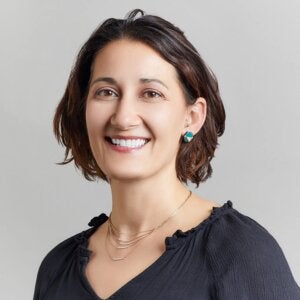
Connie Moon Sehat

Connie Moon Sehat is Director of Research and co-Founder of Discourse Labs, a non-profit that develops tools and resources for productive public dialogue. As a researcher, her work has focused on questions related to information and conversational quality, as well as ethical practice. Dr. Sehat has focused on the intersections of technology and democratic life for over twenty-five years.
Her doctorate from Rice University specialized in twentieth century German history, with minor fields in Enlightenment Europe and Modern Japan, while her first job out of college allowed her to develop software for the International Space Station. She has served as a Senior Fellow for Media, Entertainment and Sport Industries at the World Economic Forum, and also previously worked for The Carter Center, Emory University, and The Center for History and New Media at George Mason University.

Kristen Shahverdian

Program Director, Campus Free Speech
PEN America

Taking the Temperature of Campus Speech
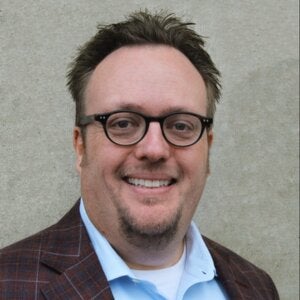
Kristen Shahverdian

Kristen Shahverdian is the program director of campus free speech at PEN America, developing campus engagements and public events related to free expression and education. Before joining PEN America, she was a senior lecturer at the University of the Arts in Philadelphia and previously was an adjunct professor at Rowan University and Temple University. She served as a project manager for the Philadelphia Folklore Project, and facilitated workshops on how to teach representations of violence in art at Moore College of Art & Design, Common Field, the College Art Association and Dance Studies Association. She is also a writer and editor at the online dance journal thINKingDANCE. She received her BA in history and dance from Hamilton College, her MFA in dance from Temple University, and her MA in socially engaged art from Moore College of Art & Design.

Michael Wagner

Professor of Journalism and Mass Communication
University of Wisconsin-Madison

Mis/Disinformation and the Decline of Expertise

Michael Wagner

A former journalist, Wagner is the William T. Evjue Distinguished Chair for the Wisconsin Idea, Director of the Center for Communication and Civic Renewal and Professor of Journalism and Mass Communication. As Principal Investigator of $12 million in extramural funding, Wagner is an expert in survey research methods and randomized control trial interventions to combat misinformation, improve public knowledge, civic trust, and political participation. Wagner has published seven dozen books, peer-reviewed articles and public-facing pieces in outlets like Science, Journal of Communication, Cambridge University Press, and the Washington Post. A winner of multiple research, teaching, and community-engagement awards, Wagner regularly facilitates workshops for journalists, legislative staff, election administrators, and public health officials.