
Skip to content

#SpeechMatters 2026

Preserving the Pillars of Free Expression

April 8, 2026 · Virtual

Featured speakers
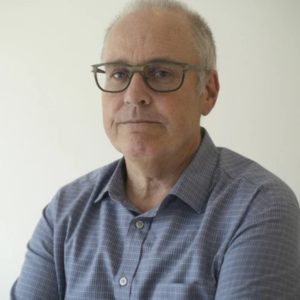
David Bauder

National Media Writer
Associated Press

Press under Pressure: Current Threats to Journalistic Inquiry · Panelist
David Bauder

David Bauder is the AP’s national media writer, covering the intersection of news, politics and entertainment. He is based in New York.

Erwin Chemerinsky

Dean
UC Berkeley School of Law

Ask the Experts: Campus Speech and Academic Freedom · Speaker
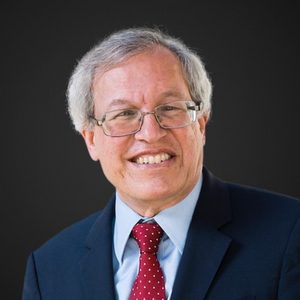
Erwin Chemerinsky

Erwin Chemerinsky became the 13th Dean of Berkeley Law on July 1, 2017, when he joined the faculty as the Jesse H. Choper Distinguished Professor of Law.

Prior to assuming this position, from 2008-2017, he was the founding Dean and Distinguished Professor of Law, and Raymond Pryke Professor of First Amendment Law, at University of California, Irvine School of Law. Before that he was a professor at Duke University from 2004-2008, and from 1983-2004 was a professor at the University of Southern California Law School.

He is the author of eleven books, including leading casebooks and treatises about constitutional law, criminal procedure, and federal jurisdiction. His most recent books are, We the People: A Progressive Reading of the Constitution for the Twenty-First Century (Picador Macmillan) published in November 2018, and two books published by Yale University Press in 2017, Closing the Courthouse Doors: How Your Constitutional Rights Became Unenforceable and Free Speech on Campus (with Howard Gillman). He frequently argues appellate cases, including in the United States Supreme Court.

In 2016, he was named a fellow of the American Academy of Arts and Sciences. In January 2017, National Jurist magazine again named Dean Chemerinsky as the most influential person in legal education in the United States.

David Cole

Professor in Law and Public Policy
Georgetown University

Jawboning, Censorship and the First Amendment · Panelist
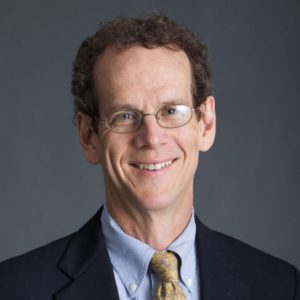
David Cole

David Cole is the Honorable George J. Mitchell Professor in Law and Public Policy and former National Legal Director of the American Civil Liberties Union (ACLU). He writes about and teaches constitutional law, freedom of speech, and constitutional criminal procedure. He is a regular contributor to The New York Review of Books and is the legal affairs correspondent for The Nation.

David has published widely in law journals and the popular press, including The Yale Law Journal, California Law Review, Stanford Law Review, The New York Times, The Washington Post, The New Yorker, The Atlantic, and The New Republic. He is the author or editor of ten books, several of which have won awards. Less Safe, Less Free: Why America Is Losing the War on Terror, published in 2007, and co-authored with Jules Lobel, won the Palmer Civil Liberties Prize for best book on national security and civil liberties. Enemy Aliens: Double Standards and Constitutional Freedoms in the War on Terrorism received the American Book Award in 2004. No Equal Justice: Race and Class in the American Criminal Justice System was named Best Non-Fiction Book of 1999 by the Boston Book Review and best book on an issue of national policy in1999 by the American Political Science Association.

David received his bachelor’s degree and law degree from Yale University. He worked as a staff attorney for the Center for Constitutional Rights from 1985 to 1990. He has continued to litigate as a professor and, from 2017 to 2024, as National Legal Director of the ACLU. He has litigated many significant constitutional cases at the Supreme Court, including Texas v. Johnson (1989), which extended First Amendment protection to flag burning; Bostock v. Clayton County (2020), which held that discrimination on the basis of sexual orientation and gender identity are prohibited forms of sex discrimination under Title VII; Mahanoy Area Sch. Dist. v. B.L. (2021), which protected student online speech from school discipline; and National Rifle Association v. Vullo (2024), which held that government officials violate the First Amendment when they use their regulatory authority to coerce private parties to blacklist a disfavored political group.

David has received two honorary degrees and numerous awards for his work, including the inaugural Norman Dorsen Presidential Prize from the ACLU for lifetime commitment to civil liberties. The late New York Times columnist Anthony Lewis called David “one of the country’s great legal voices for civil liberties today.” Nat Hentoff called him “a one-man Committee of Correspondence in the tradition of patriot Sam Adams.”

Michelle Deutchman

Executive Director
UC National Center for Free Speech and Civic Engagement

Opening Remarks · Speaker

Closing Remarks · Speaker
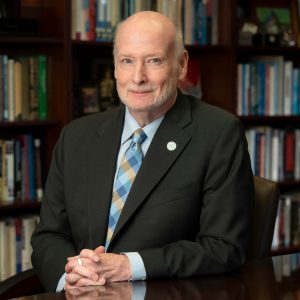
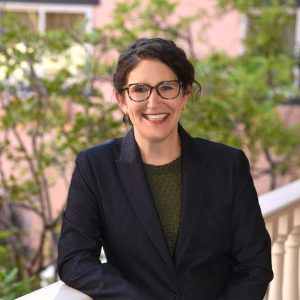
Michelle Deutchman

Michelle N. Deutchman is the inaugural executive director of the UC National Center for Free Speech and Civic Engagement (Center). In this role, she oversees the Center’s operations, programming and research including its multidisciplinary national fellowship program. Deutchman facilitates workshops for staff, students, administrators and law enforcement on First Amendment principles and how to safeguard free speech at universities while simultaneously maintaining a safe and inclusive campus climate. Her work to study and shape the national discourse on expression and engagement touches all 10 UC campuses as well as higher education institutions across the county.

Before joining the Center, Deutchman served for 14 years as western states civil rights counsel and national campus counsel for the Anti-Defamation League (ADL), a non-profit organization that combats bigotry, prejudice and anti-Semitism. As national campus counsel, she focused on emerging trends and challenges pertaining to free expression at colleges and universities. Her work included drafting state and federal legislative testimony and creating training modules for use with ADL’s award-winning anti-bias education program.

During her tenure at ADL, Deutchman also developed subject matter expertise on hate crime laws and how to respond to bias-motivated incidents effectively. She received certification from the California Commission on Peace Officer Standards and Training and educated thousands of local, state and federal law enforcement about the First Amendment and hate crime legislation.

From 2014-2018, Deutchman taught a law seminar at UCLA School of Law that she designed, Sword or Shield: Contemporary Free Exercise Issues.

Deutchman earned her Juris Doctor from the University of Southern California Gould School of Law, where she graduated Order of the Coif. She is a Phi Beta Kappa graduate of the University of California at Berkeley and holds a Bachelor of Arts in Political Science.

Howard Gillman

Chancellor
UC Irvine

Ask the Experts: Campus Speech and Academic Freedom · Speaker
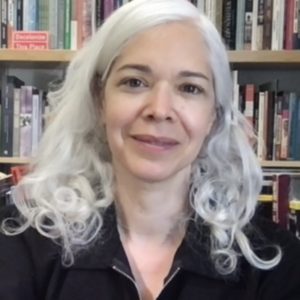
Howard Gillman

Howard Gillman became the sixth chancellor of the University of California, Irvine in September 2014. He is an award-winning scholar and teacher with an expertise in the American Constitution and the Supreme Court, and holds faculty appointments in the School of Law, the Department of Political Science, the Department of History, and the Department of Criminology, Law and Society.

Under Chancellor Gillman’s leadership, UCI has accelerated its ascendency among globally preeminent research universities. It has been ranked in the top 10 of all public universities in the nation by U.S. News & World Report; furthered its national leadership in sustainability; solidified its status as a “first choice” school for undergraduates by receiving more than 133,000 freshman and transfer applications for fall 2021; received special recognition for advancing student success and promoting social mobility; fostered regional economic development through UCI Beall Applied Innovation; and expanded its capacity to improve lives in our region and around the world.

A native of Southern California, Chancellor Gillman grew up in North Hollywood and was a first-generation college student. He earned bachelor’s, master’s, and doctoral degrees in political science at UCLA.

Jennifer A. González

Professor of the History of Art and Visual Culture
UC Santa Cruz

Artistic Expression in an Age of Political Pressure · Moderator
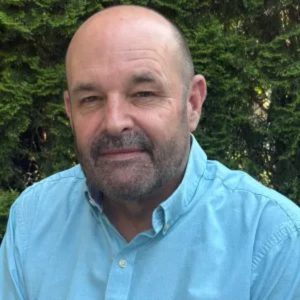
Jennifer A. González

Jennifer A. González, Professor of the History of Art and Visual Culture, is affiliated with the History of Consciousness, Latin American/Latinx Studies, and Feminist Studies. She also teaches annual seminars at the Whitney Museum Independent Study Program in New York. She has received fellowships from the Ford Foundation, the American Association of University Women, and the American Council of Learned Societies. She has published widely in journals such as Camera Obscura, Bomb, Open Space, Art Journal, Aztlán the Journal of the Archives of American Art and in numerous exhibition catalogs, most recently in Diego Riveras America, SFMOMA (2022) and Amalia Mesa Bains, Archeology of Memory (2023). Her first book Subject to Display: Reframing Race in Contemporary Installation Art (MIT Press, 2008) was a finalist for the Charles Rufus Morey Book Award. Her second book focused on the MacArthur-award-winning artist Pepón Osorio (University of Minnesota Press, 2013). She is the chief editor of Chicano and Chicana Art: A Critical Anthology (Duke University Press, 2019) which was named one of the top art books of the decade by ArtNews in 2020.

Mike Hiestand

Senior Legal Counsel
Student Press Law Center

Press under Pressure: Current Threats to Journalistic Inquiry · Panelist
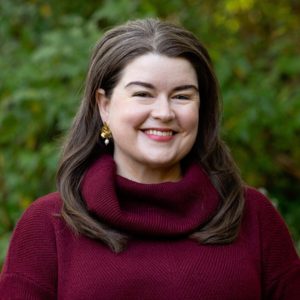
Mike Hiestand

Mike Hiestand has been integral to SPLC’s success since 1989. He was an SPLC intern, its first legal fellow and then served as full-time staff attorney from 1991-2003. Over the years, he has assisted over 20,000 student journalists and advisers using the Center’s free media law legal hotline. In addition, he co-authored the last three editions of the SPLC’s book, Law of the Student Press, and is responsible for many of the legal resources produced by Center over the last three decades. As the SPLC’s Senior Legal Counsel, he currently works from the west coast on the SPLC hotline and related projects. During the 2013-14 school year, Hiestand traveled around the country with free speech icon Mary Beth Tinker, teaching and speaking out on behalf of student press rights and free expression. “Tinker Tour USA” kicked off on Constitution Day at the National Constitution Center in Philadelphia and logged just under 25,000 miles while speaking at schools, colleges, churches, a youth detention facility, courts and several national conventions. Hiestand, who grew up in Alaska, graduated from Bartlett High School in Anchorage and went on to Marquette University’s College of Journalism and Cornell Law School. He lives with his family near Bellingham, Washington, in the heart of Cascadia.

Kate Hudson

Deputy VP & Counsel for Government Relations & Public Policy
Association of American Universities

Jawboning, Censorship and the First Amendment · Panelist
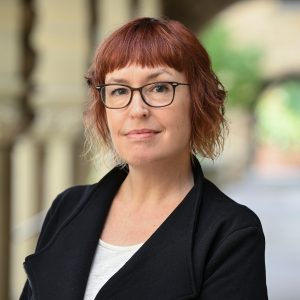
Kate Hudson

Kate Hudson has served at AAU since March 2022. As Deputy Vice President and Counsel for Government Relations and Public Policy, Kate assists in managing and directing the Government Relations and Public Policy department and developing and executing strategies to advance AAU’s advocacy and public policy priorities in the federal legislative and regulatory arenas. Her portfolio includes intellectual property, technology transfer, open and public access, export controls, sexual harassment, data privacy, and copyright issues. In addition, she supports AAU’s policy and federal relations work in areas that require legal expertise, such as tax issues related to research, labor and employment, research security policy, higher education Title IX issues, and other regulatory matters important to America’s leading research universities. Kate also leads AAU’s General Counsels (GC) constituent group and the CFR Tax Task Force.

Prior to joining AAU, Kate served in the U.S. federal government as a senior attorney-advisor in the legislative and executive branches, most recently with the U.S. Government Accountability Office (GAO). At GAO, she provided legal counsel on a range of issues including interagency governance bodies, federal financial management, legislative drafting, and technical advice to Congress. Before her work at GAO, Kate served as an attorney-advisor with the U.S. Office of Personnel Management (OPM), as both an administrative litigator before the Merit Systems Protection Board (MSPB) and the U.S. Equal Employment Opportunity Commission (EEOC) and regulatory counsel. Additionally, she served as agency counsel for three years in the federal litigation surrounding the 2015 OPM cyberbreach case (In re: OPM, 928 F.3d 42 (D.C. Cir. 2019), the largest federal class action privacy lawsuit in U.S. history. Before serving at OPM, she was the inaugural director of the Executive branch CXO Fellows Program at the U.S. General Services Administration (GSA) and as a key member of the Office of Government-wide Policy (OGP) providing programmatic support to the Office of the Chief Information Security Officer (OCIO), the Office of Federal Financial Management (OFFM), and the Office of Federal Procurement Policy (OFPP) at the U.S. Office of Management & Budget (OMB).

Before her federal government service, Kate began her legal career as an attorney with the Georgia Legal Service Program (GLSP) Augusta office, providing comprehensive civil and administrative representation to low-income and indigent clients in a thirteen-county area in rural Georgia. Following a move to North Carolina, she became an assistant public defender with the NC Office of the Public Defender in the 13th Judicial District, where she represented clients in criminal misdemeanor, felony, and parole proceedings. Following the subprime mortgage crisis of 2008, Kate became a staff attorney with Legal Aid of North Carolina (LANC) as part of the Mortgage Foreclosure Defense Project, representing clients both in federal and state courts in affirmative litigation on a wide range of special proceedings actions including emergency bankruptcy petitions and negotiating loan modifications to save clients’ homes from unlawful foreclosure in a nine-county area. Before law school, Kate worked in government relations with the American Hospital Association (AHA) and as a data analyst with the National Committee for an Effective Congress (NCEC).

An active volunteer, Kate is a member of the Military Spouse JD Network (MSJDN), the Women’s Bar Association of the District of Columbia (WBA), and Women in Government Relations (WGR). She also provides pro bono legal services to District of Columbia residents through Whitman-Walker Health and the District of Columbia Bar Association Volunteer Lawyers Project.

She holds a master’s degree in public administration and policy from American University; a law degree from the University of Dayton School of Law; and both a master’s and bachelor’s degree in political science from Ohio University. She is licensed to practice law in Georgia, North Carolina, and the District of Columbia.

Daphne Keller

Director of Platform Regulation
Stanford Law School

Jawboning, Censorship and the First Amendment · Panelist
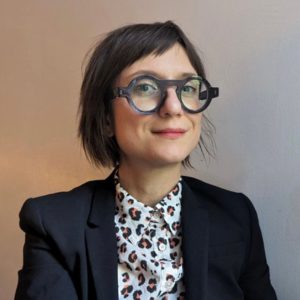
Daphne Keller

Daphne Keller is the Director of Platform Regulation, and was formerly the Director of Intermediary Liability at CIS. Her work focuses on platform regulation and internet users’ rights. She has published both academically and in popular press; testified and participated in legislative processes; and taught and lectured extensively. Her recent work focuses on legal protections for users’ free expression rights when state and private power intersect, particularly through platforms’ enforcement of Terms of Service or use of algorithmic ranking and recommendations. Until 2015 Daphne was Associate General Counsel for Google, where she had primary responsibility for the company’s search products. She worked on groundbreaking Intermediary Liability litigation and legislation around the world and counseled both overall product development and individual content takedown decisions.

Elizabeth Larison

Arts and Culture Advocacy Program Director
National Coalition Against Censorship

Artistic Expression in an Age of Political Pressure · Panelist
Elizabeth Larison

Elizabeth Larison is the director of the Arts & Culture Advocacy Program at the National Coalition Against Censorship, a member and co-curator at Don’t Delete Art, and a writer and curator. She oversees art censorship case interventions and advocacy leadership; field-wide strategizing and education initiatives; leads in the development of resources; and collaborates with other organizations in the field to strengthen artistic freedom across the United States. Her work has been featured in The Art Newspaper, Art in America, The Interlocutor, Transatlantica, Full Bleed, and Art21, and she regularly speaks on artistic freedom in the United States and online, and has done so at events hosted by Amant, ArtTable, Art at a Time Like This, Artists at Risk Connection, Brooklyn Rail, CEC Artslink Four Freedoms Park Conservancy, Lawyers for the Creative Arts, New York City Council, RightsCon, Undoxx, the University of Texas at Houston, among others.
Prior to and outside of her work with NCAC, Elizabeth has worked in curatorial, programmatic, and directorial capacities for arts organizations and venues such as A.I.R. Gallery, apexart, Flux Factory, the Judd Foundation, the Park Avenue Armory, and the Vera List Center for Art and Politics. Elizabeth co-edited Not Going It Alone: Collective Curatorial Curating (apexart, 2024), and is a contributor to Secretary to the People: Civic Engagement through the Art of Sheryl Oring (Intellect Books, expected 2026). She holds academic degrees in Human Rights (BA, Bard College) and Curatorial Studies (MA, Center for Curatorial Studies at Bard College), and has over fifteen years of experience working in civil society organizations expanding access to and participation in the arts, and defending artistic freedom. In her spare time, Elizabeth likes to see art, play softball, and is learning to play piano.

Frank LoMonte

Senior Counsel
CNN

Press under Pressure: Current Threats to Journalistic Inquiry · Panelist
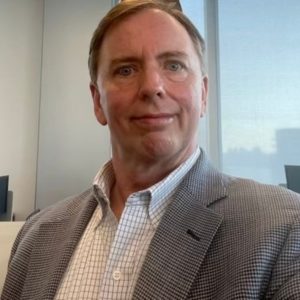
Frank LoMonte

Frank LoMonte is newsroom legal counsel to CNN, where he advises the network’s 3,000 worldwide journalists on the full range of legal issues that arise in gathering and distributing news. He is an adjunct instructor at the University of Georgia School of Law and previously taught at the University of Florida, where he directed the Joseph L. Brechner Center for Freedom of Information. After graduating from the University of Georgia School of Law, he clerked for federal judges on the Eleventh Circuit U.S. Court of Appeals and the Northern District of Georgia. He is co-chair of the Free Speech and Free Press Committee of the American Bar Association and a national board member with the Society of Professional Journalists Foundation, which recently awarded him the organization’s highest honor for career achievement, the Wells Key. He has published more than 30 articles in legal journals addressing a variety of media-law topics. During 2021-22, he served as a fellow with UC’s National Center for Free Speech and Civic Engagement.

James B. Milliken

President
University of California

Opening Remarks · Speaker
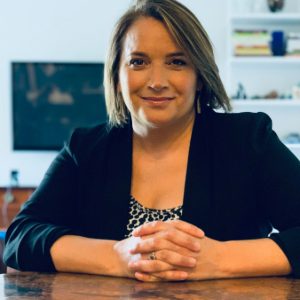
James B. Milliken

Distinguished higher education leader James B. Milliken became University of California’s 22nd president on August 1, 2025.

President Milliken oversees UC’s world-renowned system of 10 campuses, six academic health centers, three affiliated national laboratories, more than 290,000 students and 230,000 faculty and staff.

President Milliken has more than 30 years of experience serving in leadership roles at large institutions. Most recently, he served as chancellor of the University of Texas System (UT) from 2018-2025, where he also held the Lee Hage and Joseph D. Jamail Regents Chair in Higher Education Leadership.

As UT’s chancellor, he led one of the largest public university systems in the United States, composed of 14 academic and health institutions, including seven medical schools and five Carnegie R1 research universities. He led efforts to meet the needs of a growing and diversifying state and nation, including a commitment to increasing training, education, and research programs in information technology, cybersecurity, advanced manufacturing, public health, and medicine.

Before joining the UT System, Milliken served as chancellor of the City University of New York (CUNY), the largest urban university system in the country, where he was a tenured Distinguished Professor of Law, Public Policy, and Education. Prior to CUNY, he served as president of the University of Nebraska, where he was a tenured professor in the schools of law and of public policy. He also served as senior vice president of the 16-campus University of North Carolina. Prior to his higher education career, President Milliken practiced law.

During his career in public higher education, Milliken has received many awards and recognitions, including honorary degrees, the President’s Award from One Hundred Black Men of New York, the Cather Medal from the University of Nebraska, the Nebraskan of the Year award, the CUNY Dreamers Award, and the Lifetime Achievement Award from the City & State New York.

President Milliken is a sought-after voice in public higher education leadership. He was elected to the American Academy of Arts and Sciences and is a member of the Council on Foreign Relations. He serves on the boards of directors of the American Council on Education and the Robert B. Daugherty Water for Food Global Institute. He previously served on the board of the Association of Public and Land-grant Universities (APLU), the Business-Higher Education Forum, and the Council on Competitiveness.

President Milliken earned a law degree at New York University in 1983, where he was a Root-Tilden Scholar and research assistant to professor Norman Dorsen, then president of the ACLU.

He earned a bachelor’s degree in English with distinction, with minors in economics and history, at the University of Nebraska, graduating Phi Beta Kappa.

Margaret Talev

Kramer Director
Syracuse University

Press under Pressure: Current Threats to Journalistic Inquiry · Moderator
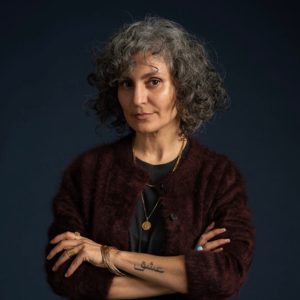
Margaret Talev

Margaret Talev is the founding Kramer Director of Syracuse University’s Institute for Democracy, Journalism & Citizenship, in Washington, DC, and senior contributor at Axios, where she previously was managing editor. She appears regularly on CNN, BBC, Sirius XM, NPR and other outlets. She has covered or directed coverage of the White House, U.S. elections, Congress; and local, breaking and politics news in California and Florida.
She is a past president of the White House Correspondents’ Association and the Washington Press Club Foundation, and a member of the Council on Foreign Relations. She is a professor of practice at the Newhouse School of Public Communications and an adjunct lecturer at Harvard’s Kennedy School, and she serves on the Board of Visitors for the Merrill College of Journalism at the University of Maryland in College Park, her alma mater.

Taravat Talepasand

Artist, Activist & Educator
طراوت

Artistic Expression in an Age of Political Pressure · Panelist
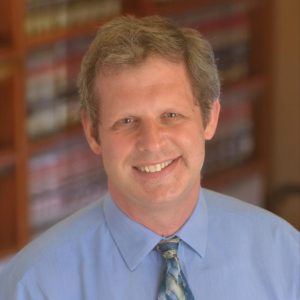
Taravat Talepasand

Taravat Talepasand is an artist, activist, and educator whose labor-intensive interdisciplinary painting practice questions normative cultural behaviors within contemporary power imbalances. As an Iranian-American woman, Talepasand explores the parallels of cultural taboos that reflect on gender apartheid and political authority to reflect the cross-pollination, or lack thereof, in her approach to subversive joy.

Taravat has exhibited nationally and internationally and is in the permanent collection of the LACMA, de Young Museum, YBCA, Tufts University, Bowdoin College Museum of Art, Orange County Museum of Art, and the Portland Art Museum. Exhibitions included In the Fields of Empty Days: The Intersection of Past and Present in Iranian Art at LACMA, طراوت | TARAVAT at YBCA and Macalester College in Minnesota, 2018 Bay Area Now 8 exhibition at YBCA, the 2026 Oregon Biennial, 2010 California Biennial, and the recipient of the 2024 Creative Heights Grant and the 2010 Richard Diebenkorn Teaching Fellowship at SFAI. Taravat was the Department Chair of Painting at SFAI and currently lives in Oregon and is the Assistant Professor of Art Practice at Portland State University Schnitzer School of Art + Art History + Design. Taravat received her BFA from RISD in 2001 and MFA at SFAI in 2006.

Eugene Volokh

Senior Fellow
Hoover Institution

Jawboning, Censorship and the First Amendment · Moderator

Eugene Volokh

Eugene Volokh is the Thomas M. Siebel Senior Fellow at the Hoover Institution. For thirty years, he has been a professor at the University of California – Los Angeles School of Law, where he has taught First Amendment law, copyright law, criminal law, tort law, and firearms regulation policy.

Volokh is the author of the textbooks The First Amendment and Related Statutes (7th ed., 2020) and Academic Legal Writing (5th ed., 2016), as well as more than one hundred law review articles. He is a member of the American Law Institute and of the American Heritage Dictionary Usage Panel, and the founder and coauthor of The Volokh Conspiracy, a leading legal blog. His work has been cited in more three hundred court opinions, including ten Supreme Court cases, as well as over five thousand academic articles. He has also filed briefs (mostly amicus briefs) in more than 150 cases and has argued in over thirty-five appellate cases in state and federal courts throughout the country. He hosts Free Speech Unmuted – a video podcast series sponsored by the Hoover Institution.

Before coming to UCLA, Volokh clerked for Justice Sandra Day O’Connor on the US Supreme Court and for Judge Alex Kozinski on the US Court of Appeals for the Ninth Circuit.

Volokh worked for twelve years as a computer programmer. He graduated from UCLA with a BS in math-computer science and has written many articles on computer software. Volokh was born in the Soviet Union; his family emigrated to the United States when he was seven years old.