
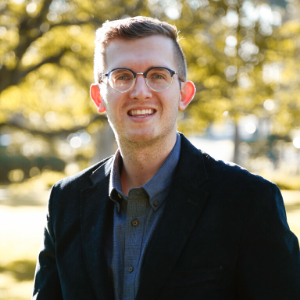
2020-2021 Fellow
Nicholas Havey
Higher Education and Organizational Change PhD Candidate University of California, Los Angeles
About Nicholas Havey
Nick Havey is a PhD candidate in the Higher Education and Organizational Change program in the Department of Education at the University of California, Los Angeles. His research interests fall under three areas: the intersection of whiteness and queerness, queer romantic and sexual politics, and student political organizations and political engagement. He works with Mitchell J. Chang (Professor of Education and Asian American Studies) and is an Editorial Assistant for the Journal of Higher Education. In addition to ongoing work investigating how queer college students respond to a lack of sexual education through community building and self-study and how queer white men on college campuses understand and describe race and racism, Nick is working on a larger group of projects focused on campus political actors.
His ongoing political work considers the key predictors that explain why students change their political orientation over the course of college and how students across the political spectrum engage in campus political discourse and understand themselves as political actors, particularly in reference to students identifying at the other end of the spectrum, and how they develop and implement rhetorical and political repertoires. This qualitative, in-depth work is paired with a big data project that looks at politically engaged students’ information networks on Twitter, what news sources are central to these networks, and how these sources are impacting media literacy and, subsequently, informed civic engagement for the contemporary student. Future work will similarly consider faculty and staff information networks and implications for campus political discourse.
Projects
Are Campuses Echo Chambers: Exploring the Information Networks of Contemporary Students
Nick’s project uses big data from Twitter to construct and analyze the information networks of politically engaged students. He looks specifically at ideological homophily (are students existing in echo chambers?) and source credibility to understand student information diets and how homophilous networks may impact digital literacy and exposure to misinformation.
Read the full project: Are Campuses Echo Chambers: Exploring the Information Networks of Contemporary Students