
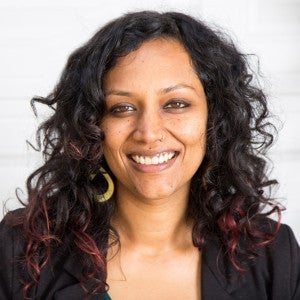
2019-2020 Fellow
Nikita Gupta
Director of the GRIT Coaching Program at UCLA
About Nikita Gupta
Nikita Gupta specializes in Transforming Trauma through Healing and Resiliency in educational as well as public and private settings. She is a recognized leader and educator and has worked nationally with at-risk communities, educational leaders and community service providers. Nikita is the founder of the innovative GRIT Coaching program at University of California, Los Angeles. The GRIT (Guidance, Resilience, Integrity, and Transformation) Program is nationally recognized as a model for excellence in mental health promotion, advocacy, and transformation for students, staff and faculty.
As a 2020 Fellow of the National Center for Free Speech and Civic Engagement, Nikita designed educational frameworks that are adaptable to various contexts for engaging communities in Trauma-Informed Practice and Embodied Leadership. Nikita’s methodology is interdisciplinary and includes Neurobiology, Positive Psychology and Somatic Education through prisms of Community Health and Social Justice.
Nikita’s work is rooted in practices of personal empowerment and social healing. Her ultimate goal is to recontextualize the untapped potential of healing, mindful awareness and resilience into institutional spaces toward achieving a greater capacity for holistic success, thriving and connection for all.
Nikita received her Master’s in Public Health from UCLA. She is also a long-time Yoga Teacher and Meditation Facilitator. Her efforts to integrate practices of healing and restoration are dedicated to both individuals and organizations. Through training, coaching and consultation, she aspires to uplift the collective in bravely moving through the unknown, while finding joy and satisfaction in each day.
Projects
Transforming Moments of Conflict Through Embodied Leadership: A Guide for Student Affairs Professionals
Nikita’s project is dedicated to supporting student affairs professionals by bolstering their ability to respond to crises through an interdisciplinary skill-building program. Her program uses theoretical frameworks of neurobiology, trauma-informed practice and healing-centered engagement, growth mindset, mindfulness and strategies for community resilience.
Read the full project: Transforming Moments of Conflict Through Embodied Leadership: A Guide for Student Affairs Professionals