
Examining Civic Engagement and Campus Climate Among University of California Muslim Students
Participation in voluntary associations and religious activities are associated with greater civic outcomes. At the University of California (UC), most students are engaged in civic activities such as student organizations. Among University of California religious students, Muslim students are highly engaged in both student organizations and community service (on and off campus). The graphics below demonstrate Muslim engagement compared to religious and nonreligious peers as well as the role that campus climate and demographic factors may play in shaping participation patterns. Based on statistical analysis of 2016 UCUES survey data, results suggest that 1) Muslims participate in civics more than religious peers 2) Feeling a sense of belonging on campus is related to increased engagement among Muslims and 3) Positive campus climates decrease likelihoods of Muslim participation. Results imply that students’ comfortable with dominant campus climates may be less inclined to participate in extracurricular civic activities.
How Are Muslim Students Engaged on Campus?
Muslim students participate in student organizations at higher percentages than their religious and nonreligious peers. They also engage in community service on and off campus at higher levels than religious and nonreligious students.
More Muslim Students Participate in Student Organizations Than Other Religious Groups

Among religious (58%) and non-religious students (64%), a significantly higher percentage of Muslim students participate in student organizations (68%).***
Muslim Students Are More Likely to Engage in Community Service on and off Campus
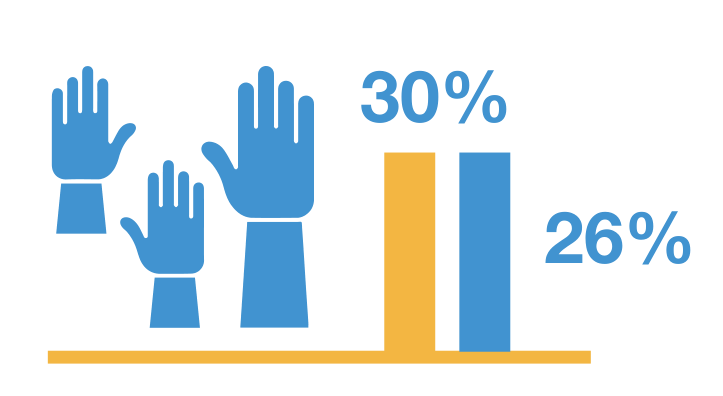
About 30% of Muslims participate in community service on and off campus compared to 26% of religious students and only 20% of non-religious students.***
Feeling a Sense of Belonging Increases Muslim Engagement
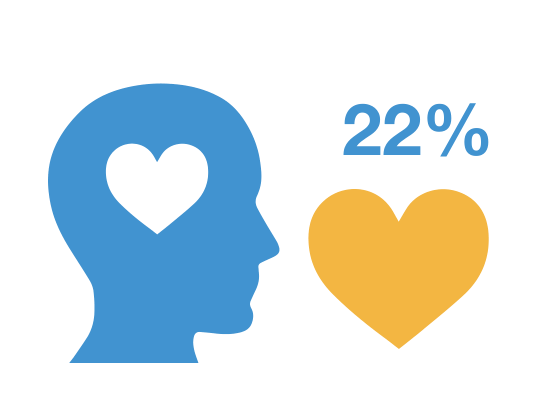
Feeling a sense of belonging increased the odds of Muslim student engagement by 22% when accounting for gender, income, race, immigrant, international status and other campus climate outcomes.**
Positive Campus Climates Decrease the Likelihood That Muslims Will Be Engaged
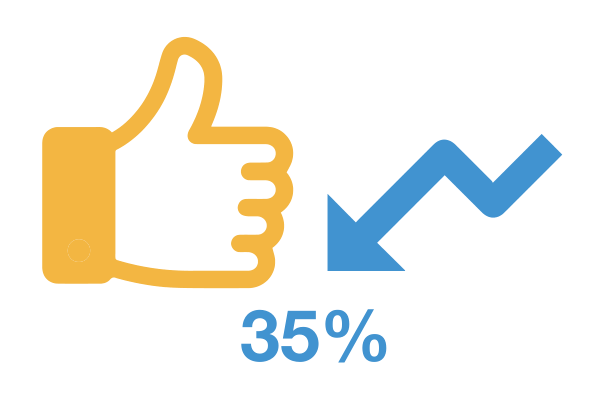
Higher ratings on administrators’ commitment to promoting a climate of respect is associated with a 35% decreased likelihood of joining a student organization for Muslim students.***
What Demographic Factors Shape Muslim Engagement?
Muslim International Students Are More Likely to Be Engaged on Campus

Muslim international students have 203% higher odds of being engaged than domestic students.*
Muslim Women Are More Engaged Than Muslim Men
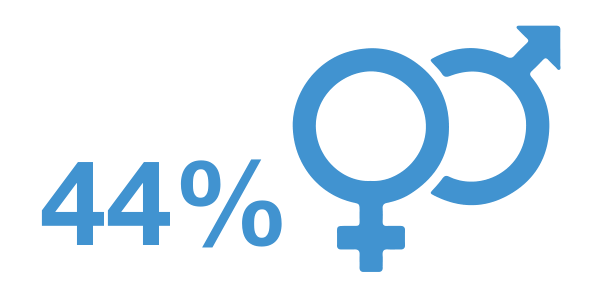
Muslim women have 44% higher odds of participating in student organizations.*
Higher Income Among Muslims Increases Odds of Engagement

Higher income among Muslims increases odds of engagement by 41%.*
Overall, Muslim students rate climate, safety and belonging positively, but lower than other religious groups on campus. Within the community, Black Muslim students’ ratings are significantly lower than non-Black Muslim peers.
While the majority of Muslim students have positive perceptions of campus climate, safety and belonging, comparing them to other groups reveals that their positive ratings are lower than their peers. Similar to the majority of Black students on UC campuses, Black Muslim students rate campus climate the lowest.
Muslims Rate Climate for Diversity About the Same as Other Religious Groups

Muslim students report slightly lower scores than religious and non-religious peers on “Overall, I feel comfortable with the climate for diversity on this campus” (80% of Muslims agree compared to 82% of other religious groups and 83% of nonreligous students).****
Black Muslim Students Feel the Least Comfortable with Campus Diversity Climates

Only 59% of Black Muslims agree that they feel comfortable with the climate for diversity on campus, compared to 83% of White/ Middle Eastern North African (MENA), 80% of South Asian and 85% of Southeast Asian students.***
Belonging Is Slightly Lower for Muslims and Non-Religious Students Compared to Other Religious Groups. Black Muslim Students Rate the Lowest Belonging to Campus

Muslim and non-religious students both rated their sense of belonging to campus lower (78%) than other religious students (81%).*** Among Muslims, 67% of Black Muslims rated feeling they belong to campus compared to 79% of their non-black Muslim peers.*
Religious and Non-Religious Students Feel Slightly More Welcomed on Campus Than Muslims

88% of religious students and 87% of non-religious students feel welcomed on campus, compared to 84% of Muslims.***
Black Muslim Students Feel the Least Welcomed on Campus
Black Muslims feel less welcomed on campus (66%) compared to their other-raced Muslim peers, such as 86% of MENA and South Asians and 85% of Southeast Asian Muslims.***
Black Muslims Are the Least Likely to Agree That They Feel Valued by the University
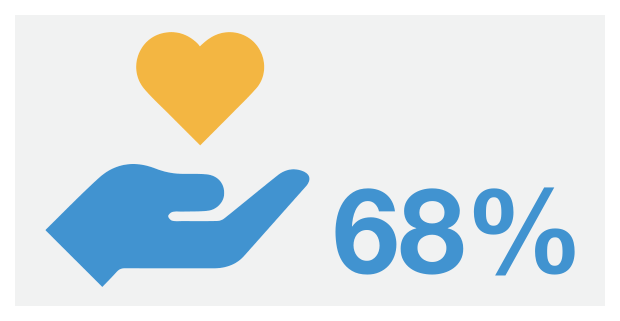
68% of Muslims compared to 67% of non-religious and 71% religious students feel valued as individuals on campus.*** Just 54% of Black Muslims agree they feel valued as individuals on campus.
Muslims Rate Campus Administrators’ and Faculty Commitment to Promote Respect Lower Than Religious and Non-Religious Peers
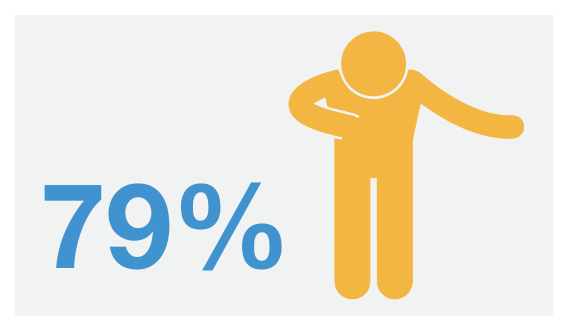
79% of Muslim students agree that faculty were genuinely committed to promoting a climate of respect on campus, compared to 84% of religious and 83% of non-religious students.** Administrators’ commitments to promote respect were rated lower (69%) among Muslims compared to 75% of religious students and 72% of non-religious students.
MENA/White and Southeast Asian students rate faculty commitment to positive climates higher (82%) than Black and South Asian Muslims (60% and 80%).*** Similarly, Black Muslims and South Asians also rated administrators' commitment to promoting respect on campus lower (54% and 68%) compared to White and Southeast Asian students (71% and 79%).*
Most Feel That Campus Is Safe

Most Muslims somewhat agree to strongly agree that campus is safe. A higher percentage of Muslims rate campus as unsafe (21%) compared to religious (18%) and non-religious students.**
Within the Muslim community, South Asians (81%) and MENA/White Muslims (80%) rated safety higher than Southeast Asians and Black Muslims (67%).*
*P<.05, **p<.01, ***p<.0001, Significance tests were derived using chi-square analysis and logit regressions. Odds of Muslim student participation were calculated accounting for demographic and student characteristic variables.
Funding for this study was provided by the University of California National Center for Free Speech and Civic Engagement. Data for this report was provided by Institutional Research, Assessment, and Policy Studies (IRAPS) at UC Santa Cruz (UCSC).
The author is a Ph.D. Candidate at the University of California, Santa Cruz. Contact: snojan@ucsc.edu.
Suggested citation: Nojan, Saugher. 2020. “Examining Civic Engagement and Campus Climates among University of California Muslim Students.” University of California, National Center for Free Speech and Civic Engagement. Accessed: freespeechcenter.universityofcalifornia.edu/fellows-19-20/nojan-research.