Programs
2027 VOICE Recipients
PROGRAM DETAILS
The Valuing Open and Inclusive Conversation and Engagement, or VOICE Initiative, provides funding for UC students, staff and faculty who are interested in conducting research or coordinating programs and activities that further the Center’s mission of exploring the intersection of expression, engagement and democratic learning and considering what can be done to restore trust in the value of free speech on college campuses and within society at large.

Campus Voices and Silences: Understanding Student Expression and Strengthening a Culture of Dialogue
UC Davis
Campus Voices and Silences: Understanding Student Expression and Strengthening a Culture of Dialogue
Project Lead: Jens Pohlmann, Lecturer and Professional Researcher / Science and Technology Studies
With support from the VOICE Initiative, students of STS 110 “Computing, Data, & Law in the United States” at UC Davis developed and conducted a survey last fall examining campus experiences with free speech. The results show that many students were not or not at all comfortable sharing opinions in in-person class discussions or in public spaces on campus. These findings highlight the need for systematic and representative data on student perspectives on campus speech, deeper insight into why students self-censor and evidence-based strategies to support a positive speech culture on campus. This year, building on our initial survey, we will develop, conduct, and analyze a representative survey on student attitudes toward free speech to establish a recurring campus-wide free speech survey. Additionally, we will conduct qualitative interviews with students to identify factors that lead them to self-censor. In order to translate these findings into concrete initiatives, we will design and implement opportunities and structured formats for students to engage in constructive dialogue. Classrooms and public campus spaces are precisely the venues where students are supposed to test ideas against one another, encounter new perspectives, and develop the capacity for respectful, productive disagreement. Through this project, we hope to help the UC Davis community realize the full potential of these spaces.
Civic Life & Dialogue in the Inland Empire
UC Riverside
Civic Life & Dialogue in the Inland Empire
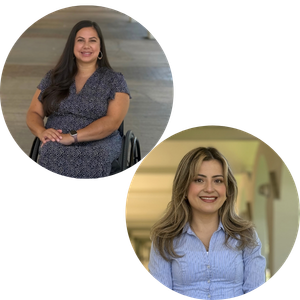
Project Lead: Carolina Jimenez Acosta, Coordinator, Leadership & Service- Office of Student Life
Civic Life & Dialogue in the Inland Empire is a year-long initiative that empowers UC Riverside students to become informed, confident, and engaged participants in civic life. Through dialogue-based learning, civic and media literacy workshops, and partnerships with local community organizations and public leaders, students will explore how civic systems shape their communities while developing the skills to engage across differences and address the issues they care about. By creating accessible, year-round opportunities for civic learning and community engagement, the initiative aims to foster a campus culture where every student feels equipped to participate in democracy and make a meaningful impact in the Inland Empire and beyond.

Grounded Voices: Civic Expression and Constructive Dialogue
UC San Francisco
Grounded Voices: Civic Expression and Constructive Dialogue
Project Lead: Mariia Kuznetsova, Practice Coordinator/ OVD UCSF Health Contact Center
Grounded Voices is a UCSF workshop series, developed for the UC Free Speech Center's VOICE Initiative (2026–2027), that helps people build the confidence and psychological readiness to speak up in civic and public settings. The core idea: people disengage from public discourse because they lack the confidence, emotional regulation, and psychological safety to speak up under pressure. This program builds inner capacity to that makes participation possible through the confidence, self-regulation, and readiness to speak.
Each workshop will contain ground (grounding techniques), practice (live speaking, in partnership with Toastmasters), evaluate (self-report measures), and reflect (what worked). It's structured as a small research project, measuring shifts in confidence, comfort with disagreement, and sense of belonging —with the goal of producing a transferable model other UC campus can adopt.
Led by Maria Kuznetsova and Janice Pollock, the project targets the people who typically go silent in existing forums: first-generation students, multilingual community members, and clinical staff. Resuming in one line: to help people start speaking because they feel ready.
PRAXIS
UC Irvine
PRAXIS
Project Lead: Annabelle Hedrick, Undergraduate Student
Praxis serves as a place for students to contribute their ideas, stories, and meaningful conversations about issues that shape our communities. We believe that every student has something valuable to say, regardless of their major, background, or level of experience.
Too often, students have thoughtful perspectives but no accessible platform to publish their work. Praxis exists to change that. Through student written opinion pieces and podcasts, we aim to amplify those voices that deserve to be heard.
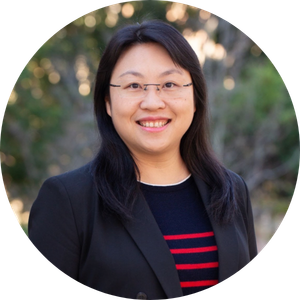
Reimagining Global Citizenship Toward 2030: A Speaker Series on Democracy, Education, and Global Engagement
UCLA
Reimagining Global Citizenship Toward 2030: A Speaker Series on Democracy, Education, and Global Engagement
Project Lead: Kathy Yi-Hang Li, PhD Candidate, UCLA School of Education
This project aims to promote democratic learning, civic engagement, and free expression through a Global Citizenship Education (GCE) speaker series hosted by the UCLA Paulo Freire Institute (PFI). The series will explore the foundations and future directions of GCE, its implementation in K–12 and higher education, the role of language and culture in fostering global citizenship, and the connections between social-emotional learning, democratic participation, and global engagement. Through these sessions, the project will create opportunities for students across the UC system to engage in meaningful dialogue on contemporary social and educational issues while exploring the connections and tensions among local, regional, national, and global identities. Ultimately, the series seeks to deepen participants’ understanding of citizenship and democracy and their roles in an increasingly interconnected world.
Social Media Storytellers: On Academic Freedom
UC Irvine
Social Media Storytellers: On Academic Freedom
Project Lead(s): Kelly Brown, Director of Media Relations and Communications, School of Humanities and Tyrus Miller, Dean of Humanities, School of Humanities
Social Media Storytellers: On Academic Freedom will return for a second year to create another cohort of undergraduate student storytellers to research, analyze, and explore academic freedom through multimedia content. The media series will be conceptualized and produced by undergrads to speak directly to their peers on this pressing campus issue. Part of a research communications fellowship, students will spend one quarter learning about academic freedom before creating social media stories on the topic. We recognize that engaging through stories is a powerful creative vehicle for addressing complicated issues. By creating a fellowship that utilizes social media as its primary platform, we strive to inspire younger generations to understand what academic freedom is, its history, and why it matters to them as students and citizens.
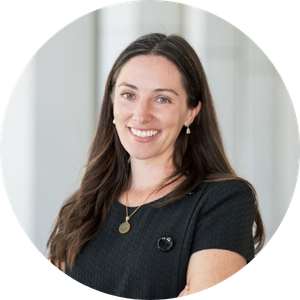
Storytelling in Public Health: Building Trust Through Open Dialogue and Civic Engagement
UC San Francisco
Storytelling in Public Health: Building Trust Through Open Dialogue and Civic Engagement
Project Lead: Andrea DeLuca, Deputy Director, Institute for Global Health Sciences
Storytelling in Public Health: Building Trust Through Open Dialogue and Civic Engagement will pilot a series of storytelling workshops and community dialogue forums that bring together UCSF students, faculty, staff, and global partners to explore complex public health and social issues. Through facilitated conversations, participants will examine how personal experience, scientific evidence, and public narratives shape trust, beliefs, and decision-making while building skills in active listening, critical thinking, and constructive engagement across differences. The project will pilot five sessions over one year, evaluate changes in participants’ trust and capacity for dialogue, and develop facilitation resources and lessons that can be shared across UC. Ultimately, the initiative seeks to strengthen a culture of free expression, intellectual curiosity, and civic engagement while creating a model that can be incorporated into IGHS educational programs.
The 2026 U.S. Midterm Elections in Hemispheric Perspective: Views from the Upper Midwest, the Sunbelt, Mexico City, and Havana
UC Santa Cruz
The 2026 U.S. Midterm Elections in Hemispheric Perspective: Views from the Upper Midwest, the Sunbelt, Mexico City, and Havana
Project Lead: Anju Reejhsinghani, Vice Chancellor, Diversity, Equity, and Inclusion/ODEI
The 2026 U.S. Midterm Elections in Hemispheric Perspective: This speaker series intends to increase student awareness of and participation in the electoral process by providing context on the stakes beyond California. It has two broad aims: (1) To explore likely short-term political, social, economic, environmental, and humanitarian impacts of the 2026 U.S. midterms in the Americas, and (2) To look ahead to what the results may mean for 2028. The series features subject matter experts exploring one topic from various geographic and disciplinary vantage points, touching on populism, voter demographics, tariffs and trade, migration, and the future of higher education.
The Art of Being Human: Reclaiming Connection Through Story, Memory, and Expression (Interdisciplinary Humanities Annual Conference)
UC Merced
The Art of Being Human: Reclaiming Connection Through Story, Memory, and Expression (Interdisciplinary Humanities Annual Conference)
Project Lead: Josiah Beharry, Ph.D. student in Interdisciplinary Humanities
The Art of Being Human reimagines the traditional academic conference by transforming it into an immersive public humanities experience centered on free expression, dialogue, and human connection. As Chair of the Fifth Annual Interdisciplinary Humanities Conference at UC Merced, Josiah Beharry will bring together scholars, artists, students, and community members through poetry, storytelling, oral history, film, music, visual art, movement, and facilitated conversations that invite participants to engage ideas not only intellectually but emotionally and creatively.
At a time marked by polarization, loneliness, and increasing social division, the project explores how artistic expression and the humanities can cultivate empathy, curiosity, and meaningful dialogue across difference. By creating spaces where participants listen, reflect, create, and share alongside one another, The Art of Being Human demonstrates that free expression is not only about the freedom to speak, but also about fostering the relationships, imagination, and understanding that sustain democratic communities.
The Plato Group
UC Irvine
The Plato Group
Project Lead: Eraldo Souza dos Santos, Assistant Professor, Department of Criminology, Law and Society
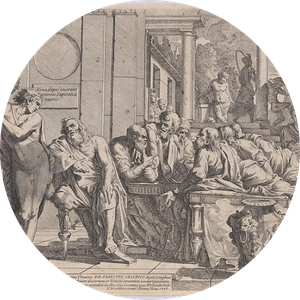
In January 2026, Dr. Martin Peterson, a professor of philosophy at Texas A&M, was instructed to remove some readings from his "Contemporary Moral Issues" syllabus. Given the new anti-DEI policies of the federal administration, many were expecting professors who assigned readings on race and gender to be under scrutiny. What most were not expecting, however, was that one of the dialogues by Greek philosopher Plato, "The Symposium," would also become a target. Plato's discussion of sexuality and homosexuality in that dialogue triggered a nationwide debate about the classics. It is well-known that many of the characters in Plato's dialogues are gay men; many discussions initiated by Socrates, considered the founding father of Western philosophy, are about male beauty, for example. This has not impeded conservative and right-wing instructors from assigning Plato's dialogues for centuries. In many schools across the country, Plato's dialogues are among the "Great Books" that every student must read to understand American culture. But assigning "The Symposium" had a lasting impact on Dr. Peterson's life. He eventually decided to resign from his position in April 2026, amid public pressure and threats. This project will invite UCI students to restage "The Symposium" as a gesture of freedom of expression and civic engagement amid efforts to censor it.