2026-2027 Class of Fellows
Our ninth class of fellows will build on the Center’s rich body of work equipping students, staff, faculty and other higher education professionals with tools and resources to navigate the evolving challenges facing colleges and universities today. Drawing on a broad range of perspectives and expertise, this cohort’s research examines topics such as the role of AI in civic education, fostering cross-partisan community and protecting academic freedom.
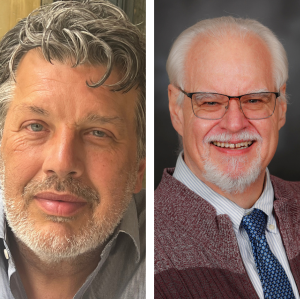
Darrin Hicks & Ronald Greene
Professor of Communication Studies, University of Denver; Professor of Communication Studies, University of Minnesota
Research Title: “Campus Convictions: Religious Exemptions, Compelled Speech, and the Future of Academic Freedom”
This project addresses two questions about conviction-based exemption claims in higher education: when does one's moral conviction justify refusal to participate in academic life, and what follows for academic freedom when it migrates from faculty to student? Recent conscience-exemption laws have made answering both imperative.
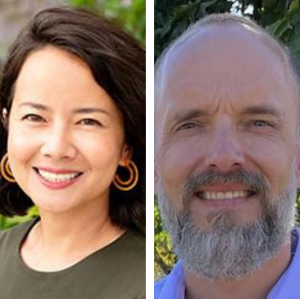
Emily Nagisa Keehn & Dustin Sharp
Assistant Dean for Law Student Affairs, University of San Diego School of Law; Professor, Kroc School of Peace Studies, University of San Diego
Research Title: "Private Institutions Under Public Standards: The Leonard Law and the Future of Student Expression"
This project examines California’s Leonard Law, which applies First Amendment–like speech protections to students at private universities. It analyzes the law’s doctrinal and governance implications, offers practical guidance for administrators, and evaluates whether similar legislation should be adopted elsewhere, balancing student expression, institutional autonomy, democratic participation, and pluralism.
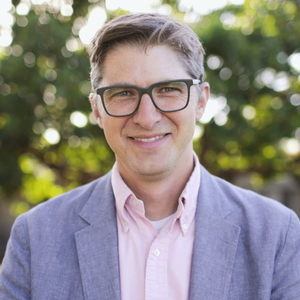
Daniel Lane
Associate Professor, Department of Communication, UC Santa Barbara
Research Title: "AI as a Civic Educator: Artificial Intelligence and the Civic Future of American College Students"
This project explores AI chatbots as emerging sources of civic socialization among American college students. It aims to foster more active public dialog about what kinds of citizenship will emerge from AI-infused college experiences and how institutions can engage with AI to promote robust democratic expression and participation.
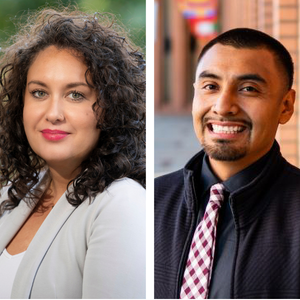
Heather McCambly & Román Liera
Assistant Professor of Critical Higher Education Policy, School of Education, University of Pittsburgh; Assistant Professor of Educational Leadership, Montclair State University
Research Title: "Bargaining for Democracy: Faculty Unions, the BCG Framework, and the Defense of Civic Education"
Faculty unions remain a critical, if underleveraged, source of collective power for defending academic freedom and civic education. We examine how the Bargaining for the Common Good framework can expand union action beyond wages to resist authoritarian curricular erosion, mobilizing around the politics of what gets taught and who should decide.
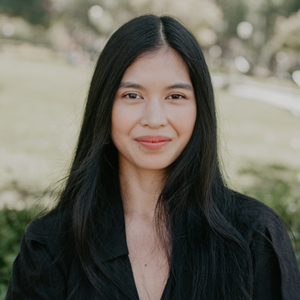
Nicole Ngaosi
Ph.D. Candidate in the Program in Higher Education Leadership and Policy, University of Texas at Austin
Research Title: "Censoring Diversity and Reframing Civics: Understanding Political and Legal Pressures on Curricular Decision-Making in U.S. Public Universities"
Recent efforts to assert “curricular control” over postsecondary institutions have included censorship of diversity-related content (e.g., race, ethnicity, gender, sexuality) in curricula as well as establishment of “civic thought” centers that purportedly promote “intellectual diversity.” This project examines how faculty members navigate these parallel pressures at three public postsecondary institutions, where faculty participation in institutional governance and curricular decision-making has diminished.
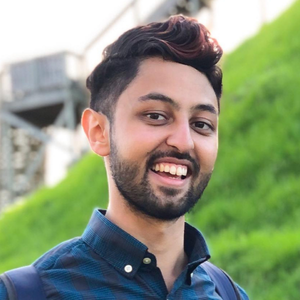
Sachin Pendse
Assistant Professor, Division of Clinical Informatics and Digital Transformation, Department of Medicine, UC San Francisco
Research Title: "Empathy and Expression: Can Campus Peer Mental Health Spaces Serve as Cross-Partisan Sites of Free Speech?"
Can the act of sharing mental health struggles (and supporting others through them) help to bridge partisan divides and reduce outgroup animosity? This project explores the role of free expression in college peer mental health support, investigating whether campus support spaces can serve as cross-partisan sites for shared vulnerability.
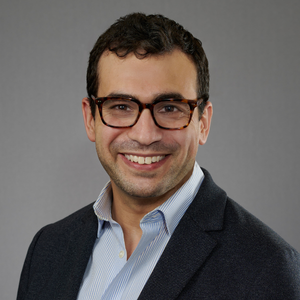
Zalman Rothschild
Assistant Professor of Law and Horn Family Distinguished Research Scholar in Law and Religion, Benjamin N. Cardozo School of Law
Research Title: "‘Hostile Environments’ on Campus: A Revised Doctrinal Framework"
This project examines when speech on matters of public concern can contribute to an unlawful hostile environment on university campuses. Drawing on recent Title VI litigation and hostile environment doctrine, it analyzes how courts distinguish protected campus expression from actionable harassment and seeks to clarify the doctrinal frameworks governing that line.

Ali Watts
Assistant Professor, School of Counseling, Higher Education, Leadership and Foundations, Bowling Green State University
Research Title: "Facilitating Freedom: The Contested Role of Faculty Development Professionals in Navigating Educational Gag Orders”
Academic freedom is not a stable concept; rather, it emerges through negotiation of multiple competing agendas and pressures. Drawing on cultural historical activity theory (CHAT), this study explores the role of faculty development professionals as ‘boundary-crossers’ mediating understandings and operationalizations of academic freedom within institutions impacted by anti-DEI legislation.